For those Christians who had the great privilege of being raised by parents who love the Lord, such as this author, it is something of a rite of passage to not be allowed to watch Harry Potter. The justification for it is understandable: ‘we don’t want them getting ideas in their heads about witchcraft, it’s not a good thing for them to become invested in, especially at such a young age and before they can exercise proper discernment’.
Let’s grant, for the sake of argument, that this is actually a wise ruling. What is in, and what is out? If the standard is that witchcraft is not permissible, is Lewis’ The Lion, the Witch and the Wardrobe also out? What about Tolkien? Are the great tales of Middle Earth and the shire unprofitable for young children because of the mere presence of scary monsters and magic spells?
One aspect of this comes down to connotations in terminology. Until about three years ago, this author had never heard the idea that monsters were essentially demonic. Growing up with such games as ‘Moshi Monsters’, in which you choose a silly, fun, goofy little monster to be your persona, this author always thought ‘monster’ more or less meant ‘a fictional creature that looks odd and usually scary’. To be perfectly honest, this author would probably include a good few real life creatures into that category. Come on, tell me that Diavlo from Moshi Monsters is more terrifying than bird-eating spiders or the frilled shark.
On a strictly technical level, one can understand how you could categorically call monsters demonic. If monsters are all fictional and grotesque creatures, or real creatures that have become deformed past recognition, then that kind of desecration of God’s good creation can easily be identified with the plans of the Adversary. He comes to kill, steal and destroy, amongst other things, and it’s no small leap to see how grotesque creatures would be his passion project. If you want further evidence of this, see the transgender movement. Now there’s something monstrous.
Ok, so where are we going with this? This author argues that the presence of magic and divination alone, though these are wicked and prohibited practices, is not enough to categorically ban a certain book title or movie. Narnia and Lord of the Rings are probably two of the finest pieces of Christian art in our era. Yes, Narnia is a Christian story. Narnia, like real life, happens to feature wicked characters who use evil means to pursue their grotesque ends. Scripture also contains wicked characters and gives detail of wicked actions committed in rebellion against God. The Bible is certainly not a PG book. In fact, you could not put the Bible to TV or movies faithfully without it incurring the most stringent R18 rating available.
We also argue, and set forth for consideration, that it should not be the mere presence of wickedness that invalidates a show or book, but that it should be the function and frequency of those things to the story. Let’s try some examples.
Game of Thrones: Unlike Lewis and Tolkien, Martin is not writing Christ-figures in this story. It is not a great allegory like those other works. Furthermore, the TV adaption contains frequent and graphic sex scenes. One might try to argue that this is essential to the plot, and indeed it is present in the books, but only a fool wouldn’t realise that many viewers have chosen to watch GoT because it contains sex and nudity.
Star Wars: We can consider ‘the force’ to be a soft-magic system built within an Eastern worldview. George Lucas was explicitly influenced by Joseph Campbell, so the ‘hero with a thousand faces / hero’s journey’ tropes are abundant and clear. Across all six of the original films, the force is used, and viewers see how being motivated by hate can be powerful, but ultimately leads to corruption, loss of what is truly important, and bondage to powers of darkness.
Avatar (The Last Airbender): In terms of teaching children lessons about cooperation, friendship, love and forgiveness, it has a lot going for it. However, the presence of Eastern Religion is even clearer in Avatar than in Star Wars. Certain episodes function as more or less an instructional series on how to use Hindu/Buddhist techniques to access Chi power. This leaves the realm of mere fiction, and (in our opinion) crosses the line into tempting an impressionable young person towards ‘unlocking their chakras’ and so on. Thankfully, the conscientious parent could easily skip this with little impact on the greater story.
These are only a small handful of examples, and many more could easily be produced. This author hasn’t made any sweeping conclusions for you, the reader, about which of those you should or shouldn’t watch. However, consider our rubric of function and frequency.
Function: what does the magic/monster/immorality/false religion/sexual references do for the story? In Les Misérables, the character Fantine turns in desperation to prostitution, and in the recent musical film adaption we see her singing I Dreamed a Dream while some man is on top of her. That shot lasts for maybe a couple of seconds, and doesn’t contain any nudity, and doesn’t in any way present the scene as something erotic, arousing or laudable. This scene functions to show the depths of despair that Fantine is driven to, thanks to the wicked extortion of the Thénardiers, and the tough economic conditions of France at the time. Even still, that is pushing it.
In most shows and movies today, sex scenes are altogether unecessary, and primarily exist to increase the clicks that the show will get. That’s just the reality of it. In decades past, sex scenes would be merely implied, or only the scenes before or after would be shown. There are ways of explaining to an audience that two people had sex without showing it.
Asking the question of function can easily disqualify many shows, and it probably should. It doesn’t necessarily follow that just because one of these things functions in an artistic or important way in the plot that it can, however, be excused.
Frequency is another important one. The reality is that there are some great movies that just have one scene in them that you wouldn’t want a young person (or perhaps any person) seeing. In matters like this, one can often google a content review for a program beforehand, identify when in the story the objectionable content will come (whether sex scene, Séance, idol worship, gratuitous violence etc) and simply click past it. However, since this brings the viewer closer to the chance of accidentally seeing something, it is a decision that requires wisdom.
Let’s bring this back to myths, monsters and magic. This author is not trying to rag on conscientious Christian parents who want their children to come to love stories of righteousness triumphing over evil, and not become obsessed with dark and occult characters. That is a good and laudable desire. However, wisdom is needed when deciding what’s in and what’s out. If you throw out any trace of a monster, then do not be surprised when many babies fall out of the window along with the bathwater. What’s more, if you want to avoid all stories of witchcraft, you’ll have to tear chapters out of your Bible also.
As a wise woman once said, “The more you tighten your grip, Tarkin, the more star systems will slip through your fingers.” Let the reader understand.
The tides of culture wash in and out, they sway one way and then the other, and perhaps this is how it has always been. There certainly have been times in history when Christian faith has been so dominant in society that different Christian traditions (Congregationalists, Anglicans, Methods, etc) have been able to maintain fellowship but still keep their distance and their distinctives. Likewise, and more importantly, Christians (including all three of the examples just given) have been able to distinguish themselves from other quasi-Christian religions, such as Roman Catholicism, Mormonism and the Jehovah’s Witnesses. What category do we put Eastern Orthodoxy into? Good question, and perhaps a discussion for another time.
Whereas in past eras, these groups have often had the space to stay distinct from one another, something different is happening in our day. The culture around us is moving the Overton Window quickly to the left, and lumping everyone to the right of that place as ‘far-right’, or whatever other pejorative is popular for the day.
So, when a sincere Roman Catholic man called Matt Walsh makes a superb but harrowing documentary about the sexual insanity of our day (What is a woman? linked here and here), we witness one little example of the great trash compactor we find ourselves in.
Matt Walsh is not a Christian, but in this fight he is our ally. Some would use the term co-belligerent. In this season, believing Christians will find themselves squished closer and closer to old-fashioned believing Roman Catholics and probably even some old-fashioned sincere Mormons, since all three groups recognise that abortion is evil.
That’s no problem, though, right? It would be, except for the fact that many Protestants today are not Protestant due to some doctrinal conviction, but merely because they don’t know any other kind of Christianity, and Protestantism (in one if its forms) was probably the version they were raised in, or found first when they joined a church. We will need to know why we reject Rome’s claims to authority. We will need to know on what basis Joseph Smith is not a prophet of God. The same goes for Muhammad.
This author can stand side by side with a Sunni Muslim in wholehearted agreement that the young men of our generation are being pacified, desexed and enslaved by their addiction to porn. However, if this author is not then ready to explain why the 66 books of Scripture are the only revelation of the Yahweh of Scripture, and that Muhammad was not a prophet of God, and that Jesus wasn’t a muslim and so on, then we have a problem.
This is a call to realise that we are being pushed into a corner with people who share some common goals, but whose foundations are different and corrupt. These people are not our enemies, but we have to be prepared, as Peter said in his first Epistle, to give a defence for the hope that we have, and to do so with gentleness and respect.
Since naturalistic materialism became all the rage, Christians have been shamed out of the supernatural elements of the faith. We’ve been conditioned to be embarrassed by them, to hedge them with ‘there’s a story in Scripture that goes’ or however many other ways we have of saying ‘you aren’t supposed to take this as fact, since it is supernatural, but the point is’.
However, God is not mocked, and reality can only be denied for so long. A society full of people that were created in contact with a supernatural world are not going to live like naturalistic materialists for long. So, the seeds that were planted before this author was born have now started to bear fruit, largely in the face of New Age spirituality. Our society has gone from a categorical denial of all things supernatural to a no holds barred buffet banquet of every spiritual practice one could think of (so long as it isn’t the one instructed by Jesus). Today we have everything from the people obsessed with crystals and tarot readings and other forms of divination to those people normalising and repackaging Eastern religion into a more modern suit, whether they know it or not, and whether they mean to or not.
So the Christians, who had just gotten used to the rule that ‘to sit at the table with public intellectuals, you can only deal with empirical data’, are now gobsmacked as the atheists and agnostics are the ones bringing spiritual categories to bear in common parlance. If you have ever heard the term ‘spiritual but not religious’, that phrase is the product of what we are talking about. ‘Religious’ is the formalised, empty, old-fashioned and dead counterpart to ‘spiritual’, by which images of freedom, exploration, openness, liberty, authenticity and reality are implied.
Let’s take a second and realise where we stand. We stand between the blind man and the witch; between an ignoramus in denial of the supernatural world God made and a fool embracing all of the impure spirits in the unseen realm.
It also just so happens that we stand on a solid rock, and that all other worldviews are built on sinking sand. The world we know, which is the world God tells us about, is far more splendid and fantastic than any of these other worlds we are sold.
Dear reader, please see this! The world the atheists want to sell you is boring! Dawkins is right, the world he believes in is an unbelievably vast void of blind and pitiless chance, merely a great string of accidents occurring deterministically as entropy runs its course. At the same time, the world we are now being sold is a dangerous misunderstanding. Our society finds astral projection, but does not see the chains and fetters tied to it. Our cultural icons see DMT and Ayahuasca as new and exciting tools for self-actualisation and addiction relief, but they do not hear Moses shouting his warning, telling them of the perils and spiritual bondage they are inviting themselves into.
This author has seen more and more films and T.V. shows popping up that feature multiverse theories, astral projection, the pineal gland (most commonly referred to as the ‘third eye’), mindfulness, yoga, spirit guides, etc. This author is neither a prophet nor the son of a prophet, but he fully expects new age spirituality to come fully and earnestly into the mainstream and enslave a generation before people start realising that even Satan presents himself as an angel of light. If you, dear reader, have fully managed to not see this cultural shift, you should watch the trailers for two films: Everything Everywhere All at Once, and Doctor Strange in the Multiverse of Madness. Eastern religion / New Age spirituality are the bread and butter of these stories.
They are not benign, they are not simply unwise like a bunch of teenagers sneaking off with cigarettes and small amounts of marijuana to go and experiment. Stephen Bancarz, and so many others that were deep into the New Age who have now come to Christ can tell you with the proper terminology just what depths of slavery and bondage our neighbours are selling themselves into when they learn remote viewing or eastern meditation or any of those other practices. We fear that in 10 years, exorcisms may become common (or at least widely needed) in the west, from the sheer volume of demonic activity that so many people are inviting into their lives.
Ok ok, we’ll pull back on the doom and gloom for a second. The thing that this author finds so wonderful is that we have a better story. Sure, the herbalist/dryad aesthetic has its attractive elements. Granted, the suave scientist with his data and rock solid facts has his prestige. However, we belong to the one True and Living God, before whom all spiritual beings will one day kneel. In the ultimate Endgame, we have the confidence of knowing that we will be clothed in the righteousness of a saviour who took on innumerable lifetimes worth of sin and atoned for them all on the cross. The Almighty God who dreamed up the stars and invented physics also created great beasts of the deep and so many birds of the sky and tiny little bacteria and insects and—most amazing of them all—human beings, this is the God who you are invited to have peace with, and to call on as your Father.
God is not to be trifled with, or treated like a magic dispenser, but it is true to recognise that in history, God has used his infinite power to show the rulers of the world who he is. Imagine being Moses before Pharaoh, or Peter on the mount of transfiguration, or an Israelite behind the cloud of smoke and pillar of fire. That was our God. That was in this world, not in some fictional multiverse. There is a patch of desert somewhere in the Sinai region where that all happened.We would do well to remember that the most amazing universe is the real one, and the only all-powerful God worthy of any worship is the God Yahweh who revealed himself to us in 66 books that we call the Bible. The greatest salvation story ever is the one that has already been decided, and we have only just begun telling the world about it. What are we waiting for?
Though it may be well stated that the title of this reflection sounds like the start of a one-liner, we assure you that that is not the case. Though perhaps, it may be more entertaining to say that the only difference between an alcoholic and a drunkard is that one is on the way to the liquor cabinet, and the other is already passed out on the couch.
However, that is not at all the kind of difference we have in mind. For this subject, we must start with the disease model of addiction. Now, being untrained in the fields of psychology, biology and such other disciplines, this author will try to step lightly, as to not make a fool of himself. A straightforward definition of the disease model of addiction would be this: addiction is best described as a kind of illness, and one with biological, neurological, genetic or environmental sources of origin. To put it even more simply, you could say addiction is a disease that has happened to you, and is now part of who you are.
The last phrase there is very important. Popular approaches to overcoming addictions in today’s culture, such as that of Alcoholics Anonymous, treat the addiction as essential. It is not something that you did, it is not something that merely happened to you, it is who you are. You are not a person struggling with the vices of wine and weed, you are an alcoholic, you are an addict.
This author has firsthand experience with the disaster that occurs when someone essentialises a flaw or fault of their own. A young man in Christian circles became enamoured with the ‘Five Love Languages’, and upon discovering that Physical Touch was his primary love language, insisted that there was nothing he could (or should) do to dial back his displays of physical affection (though those of us witnessing would not have described this as affection, but perhaps lust or insecurity) to his girlfriend at the time.
It is the same as having a friend who is ‘the late friend’. If that is who they are, and if you reinforce that by telling them that that is who they are, why would you expect them to behave otherwise? Now, to the reader who has been scarred by the excesses and imbalances of ‘Word of Faith’ or ‘name it and claim it’ theology, please understand that we are not making the assertions that wolves like Osteen, Hinn or Copeland have made. However, it is common sense that if you only ever tell yourself that you never take opportunities or that you just can’t organise yourself, that you are already lowering the bar in your own mind for what outcomes you expect you can achieve.
Phew. Did we get through that without raising the hackles of the first year Psych students, the love-languages devotees and the AA acolytes? We will have to wait and see.
So, perhaps the language and conceptual background of the term ‘alcoholic’ leaves much to be desired, but what’s the big deal? Aren’t these two words basically the same? Isn’t this like arguing between Thy and Your? Well, no. It’s actually much more like the difference between ‘ethnic vainglory’ and ‘racism’, but we will save that for another day. Dearest reader, the main point that we have been angling on now for seven paragraphs, like a Great White Shark circling an unsuspecting beach-goer in the Aussie summer, is that the difference between the terms ‘drunkard’ and ‘alcoholic’ is that one of them is biblical, and the other one is ‘alcoholic’.
If there are pearls that need clutching, or accusations of pharisaism and legalism that are on standby, this is their cue. Take a breath. If you conduct a simple word search in the Scriptures for the term ‘drunkard’, you will see more than enough data to know (a) what behaviours the term is describing, (b) whether or not these are acceptable behaviours and (c) what the likely outcomes are for a person who meets this description. Calling someone a drunkard is a rebuke and an accusation, and so should it be. It is a word that ascribes fault on the part of the one drinking in excess, and shames them in due course. This is how it ought to be. Shame is not only an appropriate feature of any society, it is an inescapable feature of any society. It is not whether, but which. If you don’t believe this claim, try being a proponent of Young Earth cosmology without apology or qualification in an academic or education setting and see the response. Try speaking about how motherhood is perhaps the most glorious and ineffable calling of women to a group of professionals of both sexes, and see their response. Shame is one of the tools that every society and community uses to police its ranks. In fact, it is being used on you, and that is why you will of necessity find yourself policing your own thoughts or actions from time to time: “It’s not that I really agree with them, but we’ll never manage to be friends if I don’t follow the current rules about preferred names, so I go along with it for the sake of remaining friends. After all, someone needs to witness to them.” Alas, such an attitude witnesses first and foremost to one reality: evangelicals today care far too much for the world’s approval, and are prepared to assume on the charity and longsuffering of their Lord as if it were a light thing. In an effort to stay ‘relevant’ for the sake of the gospel, such approaches only present a gospel that loosely reflects a water balloon. It fits into any other cultural crevice it needs to, and if you coax it just right, and disappears into a shrivelled and damp puddle if approached with so much as a jagged fingernail.
So back to shaming drunkards. The reality that all the writers of Scripture showed us so consistently is that a person may be born into bondage to sin, but their hearty attempts to add more padlocks and chains to their sad state shows that the bondage is one they love, and one they will pursue forever unless Someone does something. But more on that at the end…
All sins committed by women are choices, all the iniquity of men is voluntary. (That is the same statement twice, though in our culture, accusing the women first and the men second is a grave infraction of the social laws).
So, let’s see how far we’ve come. If indeed these tangents are burning to the ground, it may be past time to get to the point.
The reality is that we ought to use biblical language, because we do not get to define the words with which we build our sentences. They are bricks, some made less scrupulously than others, some of made of unseemly mixtures of sand and pebbles, yet some others of good clay, fired thoroughly, and exhibiting that wonderful red hue that says ‘this brick would make the kind of house that a Big Bad Wolf could not huff and puff and blow down’. We ought to use biblical language because the Bible has done an excellent job of defining for us a very broad palette of words that should cover us for many and sundry purposes, whilst our society has also embarked on the mission of creating its own words, and they’re currently stuck with figuring out what ‘man’ and ‘woman’ and ‘baby’ refer to, so it is fair to say that they don’t have a great track record.
Why would you choose words from the same people who define racism as prejudice + power, or who put that immaterial and all-corruption qualifier ‘your’ before ‘truth’, rendering the latter utterly meaningless? You would not try to redeem ‘hate crimes’ into being some kind of culturally engaging way to talk about evangelism, and so esteemed reader, especially if you are trusting in Christ, we exhort you to cast aside the worthless double-speak forged by the enemies of the cross. Are we to believe that you would run into battle with rusted weapons and cardboard armour? Are we to take your word that you would write an important job application or resume in Comic Sans, with vocabulary sourced primary from the sexually explicit corners of the Urban Dictionary?
We are well aware that it may seem we labour this point. However, it is crucial. You will not see why it is crucial until you have lost, or until having watched another lose, you choose to take heed. You cannot imagine how important language is. You are letting other people reformat your thoughts.A person who has become fluent in the categories of ‘privilege’ and ‘power-politics’ and ‘racial justice’ is a person who has torn semi-trailer sized holes in the fences between their paddocks and then scowled with naive dismay as their livestock abscond for a frolic through the other fields, trampling a harvest’s worth of thus and such. Oh my, haven’t these analogies gotten out of hand?
So, be it resolved that words have meanings, and that those meanings do not change fast, and certainly do not change just because you say they do. You will find some more novel examples of this if you have the distinct pleasure (as this author has had now for a number of years) of sustaining cross-cultural discussion where you use the same words as your interlocutor, but when those same words come from her mouth they mysteriously mean something else altogether. Something about the scandal of wearing asserts thongs to a BBQ…
So it is the case, as we have mentioned now several times over, that Christ is the Lord of the Dictionary. As such, if you are trusting in Christ, you do not get to exercise autonomy over your choice of words. No, that is yet another domain encapsulated by the ‘all things’ that are being put into submission under the Son, that he might be over all. It is Christ’s lordship over our tongues that prevents us from calling ‘adultery’ an ‘open relationship’, regardless of how winsome our adulterous friends might find it, and regardless of how many nuance-points we might win with those Christians who are Christian in name only, and are only a few years away from ‘contextualising’ or ‘decolonising’ or ‘deconstructing’ their faith.
So, the reality is drunkard, not alcoholic. It is effeminate, not ‘LGBT allies’. It is apostasy, not deconstruction, and it is eunuch, not transwoman.
This, this is what all of these words have been leading up to. This author will not mince his words for the sake of pulling punches or making it go down easier. True deconstruction is apostasy. If someone’s deconstruction leads them to a more biblical, historical, presentation of the Gospel, what they are describing is not deconstruction, but sanctification. Words like ‘exvangelical’ make for useful shorthand, and quickly refer to a particular movement and socio-historical context, but at the end of the day, a spade is a spade, and those who have departed from among us have done so to show that they were never of us. If you bristle at that, at least have the temerity to learn that those words are Scripture.
So, let me wrap this section up with an alternative. Far be it from us to cut off a word that seems to be building a head of steam and not offer a positive and truthful alternative. If you, dear Christian, are in the process of carefully inspecting the beliefs you were raised in, and doing the hard work of reading the Bible to see if those beliefs have any substance, because you want to honour God and his word, then you are growing, reforming (not in the sense of identifying necessarily with Calvin, but in the plain sense of going back to the roots), refining, reassessing, or even being a Berean about your faith. These are positive terms, and not ones filled with the slimy excesses of Derrida and Foucault.
It is a shame that culture has gone so deep that the ordinary task of comparing what you believe against God’s authoritative revelation is so unforseen that it has caused cultural upheaval. Let’s support Christians who want to refine their doctrine for the sake of fidelity and orthodoxy, but let’s call a spade a spade, and not give apostasy a new name.
The good news, though it may indeed be an odd place to start for this topic, is that at a point in the future, Roe vs Wade will be overturned. That is a fact, as surely as Christ is risen. Why do we say that, and why start there?
Scripture tells us that Christ’s resurrection is proof of the general resurrection to come, and that at that general resurrection Christ will present his fully-ripened kingdom to his father. However, this general resurrection and kingdom presentation happens only after he has put all of his enemies under his feet, and Molech is certainly one of his enemies.
But in fact Christ has been raised from the dead, the firstfruits of those who have fallen asleep. For as by a man came death, by a man has come also the resurrection of the dead. For as in Adam all die, so also in Christ shall all be made alive. But each in his own order: Christ the firstfruits, then at his coming those who belong to Christ. Then comes the end, when he delivers the kingdom to God the Father after destroying every rule and every authority and power. For he must reign until he has put all his enemies under his feet. The last enemy to be destroyed is death. (1 Cor 15:20-26)
So, amidst all this turmoil, know that the outcome is already decided, and it is just a matter of time. We start there, because as Christians we can always start from a place of advantage. The one who rejects Christ and the word of God has no coherent and consistent way to make any value judgement or truth claim, so we needn’t be afraid of anything else they have to say. Even the worst they can do; whether harm, mockery or other diabolical devices are merely accolades of ours that God will glorify tenfold in the renewed creation.
This is not a debate where there are two nuanced and valid positions. One such example would be a debate over the proper place of weapons, including guns, in a society. Should they be legal at all? If so, is a licence required, and who decides on the eligibility criteria?
No, the only question in this debate is whether or not the entity inside a pregnant woman is a human being or not. If it is not, abortion is a trivial thing, like an apendectomy, and should be available to all. If it is human, then abortion is murder, and should therefore be illegal.
The first mistake a Christian can make in this debate is letting her interlocutor define the categories. This goes back to one of our earliest reflections. If they broach the topic, framing it as a ‘woman’s choice to decide whether she wants to become a mother or not’, do not play their game. The position you are being encouraged to take is one with implicit coercion. You are being encouraged to say ‘no, a woman should not have a choice in whether or not she becomes a mother, the fact is that she has become a mother!’ At the core, you have the facts properly considered, but both rhetorically and strategically speaking, you have already lost.
Take another example. A defence against abortion that says ‘it is immoral because the baby can feel pain’ is a defence that cedes control of the castle for control of the tool shed. Yes, there are things in there you can use as weapons, but no boiling oil, no cannon emplacements, and certainly nothing that a shrill band of university-educated children can’t mock. Often we get derailed into a conversation about permitting this murder at 8 weeks or 12 weeks or until there is a heartbeat or until the brain is fully formed or until late term, or until the baby is delivered, or (as it is today in many places) even after the baby has been delivered alive.
So, remember to stay on the high ground, where you belong. These are children, they became children and full of value and dignity and made in the image of God at the moment that their life was started (conception), and this is not a debatable point. Any credible biologist can confirm that at conception is when the new biological information is written, and already from that moment many factors about that boy or girl have been decided.
Keep in mind one or two other things. Most people out there aren’t unaware that what grows in the womb is a baby, and that abortion is murder. They just don’t care. They want the right to murder their children, and many of them will say so. Some are still fooling themselves about the facts of biology, but that should be no surprise, because Ketanji Brown Jackson doesn’t know what a woman is. After all, she isn’t a biologist.
So, what’s next? Well how about this chestnut: ‘if you make abortion illegal, that will only make it more dangerous, and it will still happen’. To see why this argument has less integrity than a house of cards in a tsunami, try it with slavery. ‘If you make slavery illegal, that will only make it more dangerous for the people who want to practise it, and it will still happen’. Watch as everyone loudly and rightly yells, ‘that doesn’t matter, it should be illegal because it is wrong!’ Though it is true that illegal abortion does not equal no abortion, less murder is still better than more murder.
Let’s go through just a few more slogans and some brief engagements with them, flat-packed and microwave ready.
“My body, my choice.”
A: “Thankyou for that pro-life argument. I also believe that every person should be able to choose what happens to their body, including that little boy or girl in your womb.”
“No uterus, no opinion.”
A: “I didn’t realise that having a uterus made murder legal.” (For bonus points, you could thank them for acknowledging that women have uteruses. In this day and age, this is not a given in many circles.)
“I can’t afford a baby / my family would kick me out / the baby has a debilitating disease.”
A: “You can’t kill a living person that has been born just because they are poor, or disabled or homeless. Why should a living person that hasn’t been born be any different?”
“This baby came about as the result of rape. Why should I be forced to be reminded every day of this egregious violation of my rights?”
A: “Rape is a serious sin and crime. God’s word teaches that the wicked man should be executed, but you are arguing that the innocent child should be executed. What’s more, the solution you propose to this unimaginable sin against your bodily autonomy is an even more heinous crime against a little person that utterly depends on you.
So, having discussed some of the foundational and strategic matters, let us turn our attention to what is happening in that interesting place they call America. Though this author makes no effort to stay fully on top of all the news, it appears that the Supreme Court in the U.S.A. may soon overturn a controversial court opinion that came from the Roe vs Wade case, which made it far easier to procure an abortion. We speak here in generalities, because law is not this author’s strong suit. The idea of Roe (as we shall henceforth abbreviate it) being overturned is hard to imagine, but not for the reason you think.
It is the sheer wickedness, the sheer volume of bloodguilt, the utter and complete rejection of God and his word and his world over the last however many decades, that has this author surprised. Not the wickedness itself, but the concept that instead of finally charging our national sin-debt to us, and exacting a punishment more severe than that of Sodom, that the gracious Lord God might instead bless these nations, and potentially remove Roe. But again, why should we be surprised? It is grace, grace upon grace, that we are shown in Christ. God shows grace, because he is who he is. So, whether or not this does come to pass, let us thank God with deep sincerity that he has given us another day to pursue peace and justice in the land, because we are living on borrowed time, and God would be committing no breach of fair conduct to end it all now.
This author considered making a Facebook post simply celebrating this development, but refrained because he couldn’t be bothered interacting with the backlash. It is to his shame that he says that, because that is self-censorship, and that’s just what they want. We have reached the place where we care what they think of us, and we want a seat at their table. So, please pray for boldness. Not only for yourself and this author, but for all people who find murder revolting. It is not ok that babies are being murdered. History is watching us, and everytime we ask how the Auschwitz guards could have stood by and watched as the Poles, Jews and gypsies were murdered in the millions, remember that we pay doctors to murder 10x more babies than Jews that were killed in the Holocaust, and this is supposedly ‘peace time’.
One of the saddest things that we are now seeing (aside from the unrelenting slaughter of the pre-born) is men and women who call themselves Christian coming out in support of Roe / abortion. It is sad, but they are doing us a great service, because they are making it much clearer who belongs in the kingdom and who is seeing themself out. There is no acceptable way to be pro-choice. This is not a field for Ecumenical bridge building. This is a mission field. Those who have submitted to the Lordship of Christ have submitted to championing the creational and biological categories of Male and Female, and to opposing and stamping out the murderous and idolatrous practise of abortion.
Many have wisely identified abortion as the worship service of Molech, a false god in the culture of death. It has seen many faces over the centuries, but the baby-murder has always been there. God help us. After all, we know he will, because we know how the story ends. Let us pray that we will be on the right side when the sorting happens. Let us pray that we would be the William Wilberforce of our day. So, let us celebrate Mother’s Day properly, encouraging and honouring the calling of motherhood, and defending the precious image-bearers that those women are called to bring into the world.
Again we say, rejoice! Let all the mountains bow, let the starry hosts direct their faces in adoration to the son! A new world is born, is ushered in, is promised. There is an empty cross, there is an empty grave, and the Jesus of Nazareth who was crucified is no longer in it! This is good news. This is the Good News.
This is the apex of the most important story, the story of history itself. Praise God that we get to live in the light of it, basking in the clearly revealed gospel of the resurrected Christ. So many godly men and women throughout the ages could only dream of knowing what it would be like when the Messiah would come. For us, it is as simple as opening a book called the Bible, and then seeing the world-changing effects that the good news in that book has already had around the world, and will continue to have until the world is won by the gospel.
Knowing that the stone was rolled away and that the tomb is empty makes each sunrise a little brighter, because it is now no longer just a sunrise, it is the sun rising on a world that has heard her redemption heralded by a messenger from the front lines. We are celebrating because the victory was won in eternity past when God decided on it; is won now because Christ has lived, died and risen; and will be won in the future when the last of Christ’s enemies are put in subjection before him.
See this through a historical analogy: the 8th of May, 1945, was VE Day (Victory in Europe Day). This was the day that the Allied forces accepted the unconditional surrender and defeat of Germany, and throughout Allied nations everyone celebrated that the war was won. The battles were still being fought in some places because the news of surrender had not yet reached those places, but the war was nevertheless decided, the enemy’s defeat was sure, and it was only a matter of time until V-J Day (Victory over Japan) on the 2nd of September 1945, when all could say that the war was truly and finally over (history aficionados, if this author has made a mistake in any of these historical details, he will gladly update them).
In redemptive history, we are right now living between the 8th of May and the 2nd of September. If you asked this author, he might suggest we’re around the 23rd of May, and the last ceasefire is still a ways off (if he may stretch the analogy just a little further). However, unlike World War II, God’s war against sin is a war that will only ever have one innocent casualty, the man Christ Jesus. Every other man, woman and child who died fighting by Christ’s side was once arrayed against him, taking up arms against the radiant king of the eternal throne. Each one was a restored rebel, a forgiven fighter, a blood-bought belligerent. Each one promised as he joined the ranks of the Almighty God that his life would be as willingly laid down for the gospel as the Son’s life was laid down for him.
Easter means that the tables have turned. Satan is an emperor with no clothes, and now the world of weeds, brambles, thorns and ice is thawing for the Great Spring to come, when men will lay down their swords, when the calf and the lion shall sit together in peace, and a child shall lead them (Is 11). How incomprehensible is this, and yet how beautiful! Every loss we should sustain on our walk towards the Celestial City can now only be a slight and momentary affliction on the way to an eternity of settled Shalom, perfect peace, joy in the presence of our great Bridegroom, at the marriage feast that will end the great story that God called Time.
So, let this Easter be an encouragement to you. The empty tomb speaks at the Christian, saying, ‘As surely as Christ has risen from this tomb, so also is your faith soundly placed in him.’ The empty tomb stares at the non-Christian, saying, ‘Come and see, come and learn for yourself. The man Jesus of Nazareth was buried here, and all of history proves that he was seen alive afterwards. Will you seek the truth, or will you turn away?’ Brothers and sisters, he is Risen. Risen indeed.
They say that those who don’t learn from history are doomed to repeat it. However, for this day and age, let us rephrase that: those who learn from history, but assume that such things could never happen again, well, they may just be repeating it already.
For those of this author’s generation, those who have only ever known peace and prosperity, relative freedom, democratic elections, high quality goods and services and the internet age, so many of the things we learned in school seemed like fanciful stories. Sure, you can visit a museum and see the uniforms worn by ANZACs and other returned servicemen, you can even see interviews with WW2 veterans, but it never truly seems real.
It is our generation that makes a deadly error, assuming that order and civilisational advancement is the natural state of things, and that we needn’t ask why fences were erected before we tear them down. We have been so thoroughly catechised by films and TV that we, for the most part, cannot imagine a world where petrol is not affordable and available, where electricity isn’t always on, and where our politicians could repeat the mistakes of those of the past.
The fact is that nations like Canada, the United States, England, France, New Zealand and Australia, all great in their own right, are running on fumes. Our universities and HR departments are busy demolishing the foundations on which they build their safe spaces, and so all of these have something rotten at the core. The fundamental assumptions and values that built the character of so many of these nations, values that come from the pages of Scripture, are both the strong foundation of their economic and cultural success and the subject of their bitter contempt.
Canada has fallen. Her robust charter of rights means nothing, and her leader has all the backbone of a vermicelli noodle in a wind tunnel. New Zealand, a nation that was an outstanding example of ethnic harmony between Indigenous and non-Indigenous citizens, is now subject to the societal manipulation of Ardern, who is ardent to create a two tiered society, and whose actions are bringing racist standards into law. In England, citizens are encouraged to inform on their countrymen. What is this, 1984?
How did you react when you read that? Did you think, ‘Ok, you’re right that there have been some seriously undemocratic and immoral decisions made by certain leaders, but I would make an argument that it’s not as bad as you make it out to be.’ Was that your thought, or did you scoff to yourself, thinking this author to be a boy crying wolf, and a misinformed one at that?
The generations before this author are accustomed to the legacy media: those news anchors they have known so long, the familiar TV channel, the same guy who reads the sports. Unfortunately, so much of what is actually important isn’t on the news at all. The news bulletin since the end of 2019 in Australia has been about three things: the bushfires, then covid, then Ukraine. In Melbourne, when well over 300,000 Australians marched peacefully across the city to demonstrate their strong disapproval of the proposed Vaccine Mandate bill, legacy media and the police estimated that no more than 20,000 were there. They weren’t misled, they were intentional. They chose their camera angles, and the angles they chose supported their claim. However, having been among their ranks, this author and any time-lapse footage of the event can verify that 300k is a conservative estimate.
So what, you might say, the police gave a small estimate for the number of people who turned up. How is that relevant to anything?
Well, when the established media start lying to people’s faces, they can get away with it for some time. However, anyone who has heard of the infamous paper Pravda (Правда) knows where that ends.
We are so used to entertainment that we’ve blown our sense of proportion right out the window when it comes to what is a small crisis and what is dangerous to the very foundation of our society.
What’s more dangerous to Australia; one particular respiratory virus that most people survive, or the introduction of medical apartheid, coupled with government monitoring? The scariest thing is just how quickly so many Australians have entirely forgotten their second-class citizen neighbours (those who, due to their medical status, are prohibited from entering most workplaces, restaurants, entertainment venues, sporting facilities, some religious centres and half a dozen other things.
What’s more dangerous to the survival and integrity of our nation in 100 years; the criminalisation of believing and teaching God’s word on the subject of homosexual practise, or the idea that Christian schools should be able to decide to hire only Christian teachers?
The Church is the supporting pillar that ensures that truth will always stand. Christ himself is the truth, and it is the duty of all Christians to represent truth. Should not the Christians be at the forefront of calling out cultural hypocrisy? Shouldn’t those who are commissioned to care for the widow and orphan also care for the soul of the nation in which they live? How can we be more concerned with the circuses we are given to expend our attention on (the bushfires, covid, foreign wars, etc) than those fault lines that will tear our country down into utter disrepair?
In 100 years, no one will be speaking about Joe Biden or Zelenski. In 100 years, no one will be debating the merits of Extinction Rebellion. However, if we don’t focus our attention on the indispensable necessity of free speech, free association, gathering to worship God and proclaim the full counsel of his word, the sanctity of human life from conception, private ownership of property and the sexual categories and standards of Scripture, this author has no reason to think there will be any recognisable Australia left to defend. Maybe just a new province of a neighbouring superpower, connected by belt and road.
We live in a house that we cannot imagine ever falling. We sit with our eyes glued to a black mirror, and we will not see that the house is on fire until the face we see behind the mirror is entirely engulfed.
One doctrine that many in the Roman Catholic and Eastern Orthodox traditions like to champion is their concept of ‘Apostolic Succession’; essentially, the idea that they can trace back the teacher-disciple relationship of their priests and bishops back to Jesus himself.
In discussions with Reformed Protestants, they sometimes make the argument that the Protestant tradition is disconnected from history and from the faith that has been passed down, man to man, since Jesus himself. We must admit, it is a very rhetorically powerful argument. It’s the sort of thing that carries a lot of sway in martial arts: if you are a Brazilian Jiu-Jitsu teacher and your teacher was the student of the student of the great teachers from the Gracie family, that adds a lot of weight to your claim to authority.
So, why is it that Protestants, and specifically those who are in the Reformed tradition, place so little emphasis on this seemingly very powerful claim?
Well, the fact is that as Reformers, we distrust ourselves very deeply. Paul Washer once said that he doesn’t trust his son to be alone in a compromising environment, because he doesn’t trust his son’s father. The instinct to distrust yourself and your own affections is one that comes from repeatedly having the experience Paul had, which he so eloquently captured in the seventh of Romans:
For I do not understand my own actions. For I do not do what I want, but I do the very thing I hate. Now if I do what I do not want, I agree with the law, that it is good. So now it is no longer I who do it, but sin that dwells within me. For I know that nothing good dwells in me, that is, in my flesh. For I have the desire to do what is right, but not the ability to carry it out. For I do not do the good I want, but the evil I do not want is what I keep on doing. Now if I do what I do not want, it is no longer I who do it, but sin that dwells within me.
Romans 7:15-20
The soul that has been powerfully captured by the unbelievable grace of God, the soul that has been washed and renewed, that has bathed in the graces of the word, the fellowship of the body, the proper administration of the sacraments, refreshing times of prayer and the wonder of the world God made, this soul is so stricken with pain when it finds itself wilfully committing sin, whether spontaneously or in a premeditated fashion. This is an experience peculiar to those who have been raised from death to life and seated in the heavenlies with Christ, because this experience is the special working of the Holy Spirit, who makes his home and dwelling place in the hearts of the elect, those wretched sinners whose mountain-heap of sin has been separated from them as far as the east is from the west.
So, when the Reformer says that he distrusts his desires, or his instincts, or his intuitions, he is not rejecting the powers of rationality and sense with which God has endowed him, rather, he is cherishing the incomprehensible love that God has showed him, by guarding his thoughts, actions and desires with a measure and a half of careful scrutiny. True worship may indeed be the most precious and wonderful thing in all the universe besides the God to whom it is directed.
Ok ok, you might say, but what has all that to do with the fact that it is the Patriarch of Constantinople’s Apostolic lineage that gives Orthodox believers the reassurance that their tradition is faithful to that of the first Christians?
Well, this author certainly rejects that premise, and let us now see why: Reformers do not trust themselves, nor any man. Rather, they trust God’s word in the one place where it is unchanging, and not subject to any curation, control or edition. This one place, this authority unique by its very nature, is the Holy Scripture. Where Popes and bishops and cardinals and councils and decrees and encyclicals all fall into error, God’s word is unchanging and perfect, but not only that, it is perspicuous. See the introduction to ‘The next few millennia of the End Times, and a comparison to the Quadrennial phenomenon of Olympic expertise’ for a brief outline of what perspicuity means for the Scriptures, but essentially, it is the assertion that God’s word can be understood by ordinary means of comprehension, and does not need some infallible interpreter to pronounce what the correct interpretation is on any one thing.
The rejoinder that usually comes up at this point is, ‘well, you can’t appeal to Scripture, because you can’t define what Scripture is without an external authority like The Church or Sacred Tradition’. This is false, and fails to take into account the complexity of how God’s people received God’s word, and also fails to trust that Yahweh, the personal God who has set his love on his people, would communicate clearly in such a way that his word would remain undefiled.
Many think that some kind of nebulous ‘tradition’ is the proper counterpart to Scripture, the proper safeguard against extra-biblical doctrines seeping in. The problem with tradition and following the way rather than the word is the people who keep on failing to walk that straight and narrow path. Let us quickly disabuse you of any false pretences: you are one of those people who cannot be trusted. It is true that many wonderful and Godly things can be learned by studying the way of a godly man or woman. It is true that Paul told Christians to imitate him, and he imitated Christ. That is true, and yes, and amen! However, the first reader to find a place where Paul advocated for the adherence to his way over and above the teachings of Scripture can contact this author, showing him that place in Scripture, and will find himself or herself the recipient of a long winded apology, potentially a cash prize, and the cause for a sheepish retraction of this here paragraph.
All jokes and tomfoolery aside, true apostolic succession doesn’t come from being ordained by the right guy, who can trace all the way back to Jesus. If you want evidence of this, listen to Pope Frankie for no more than five minutes, and you will realise that the old rhetorical quip ‘Is the Pope Catholic?’ has now become a serious point for debate. Pope Pius IX would have certainly excommunicated Pope Francis as a heretic. Don’t take this author’s word for it, read the Papal Encyclical of Errors. In some parts, it might as well be Pope Francis’ doctrine statement.
Indeed, true apostolic succession comes not from a lineage of names, but from faithfulness to the teachings found in God’s word. A man in Estonia who receives a Bible, commits his life to Christ, studies the word, and then goes on to Shepherd others and disciple them in the Christian walk is a man who has Apostolic Succession, even if he has never heard of Polycarp, or Ignatius, or Clement, or any church fathers at all, or any other ordinary Christian. This authority comes from holding fast to the same teachings as Jesus and the infallible words of Scripture.
If you prefer the meaningless game of tracing back the discipleship family tree back to Jesus, and that is your standard for authenticity and faithfulness in doctrine, then you have no argument against the ‘Anglican’ Priest with rainbow colours on one side of his Stole, and the symbols of Jainism, Buddhism, Islam, Zoroastrianism and Hinduism on the other, who is obviously profaning the Church of Christ, but who can also trace back his succession to Peter.
It is high time that we stopped treating this spectre of ‘the unbroken line of succession’ as some kind of powerful and august claim, but rather chortled quietly to ourselves, and went back to reading our Bibles.
It can be startling when you first really read Galatians, and you realise that Paul declares that some false teachers preying upon the Galatians were under God’s curse, or as in other translations, ‘anathematised’. Wow, that’s pretty serious. These guys must have been doing something disastrous to earn so dire a punishment, right? Surely, they were leading the Galatians after a different God, or encouraging them to profane their marriage bed by sleeping around town with anyone they desired? Perhaps, they were turning the Lord’s Supper into a spectacle of class differences, gluttony and debauchery, as with the Corinthians?
Well, no. It was nothing like that. These Galatian teachers were simply requiring that before you could be a member of the New Covenant through faith in Christ, you had to receive the sign of the Old Covenant with Abram (Gen 17), namely, circumcision of the flesh. That might sound minor, but to Paul, that’s not the difference between different Christian traditions, or just a matter of perspective, or anything like that. To Paul, that puts you in the ‘you have alienated yourself from Christ, he will be of no value to you’ category.
To put it to you straight, Paul shows that even the slightest addition to justification by faith alone will lead to a person’s damnation. Any addition to the gospel of free grace is a total corruption of it.
If that’s the case, why do so many Christians treat the Roman Catholic Church like a denomination of Christianity, as if Presbyterians, Anglicans, Methodists and Catholics share the same gospel? This author has seen this happen several times, and if you draw attention to it, the response is always a variation of the following, “Oh, be careful, I know many godly Catholics, who love Jesus as much as anyone.”
Their response is always to bring it to the direct example of a person they know, an individual Roman Catholic, and uphold that person as a genuine saint. Now ladies and gentlemen, buckle your seats, here is a reminder: the almighty God has saved sinners out of all manner of cults and false religions, such as Mormonism (a.k.a. The Church of Jesus Christ of Latter Day Saints), Jehovah’s Witnesses (a.k.a. The Watchtower Bible and Tract Society) and yes, the Roman Catholic Church. The one thing these three cults have in common is that they use the word of God to some extent, and so it does not surprise this author that God has powerfully quickened that word in the hearts of some to save them, and deliver them out of those cults.
Let us put that to you in another way: there may well be individuals who identify as Roman Catholics, and who are yet true worshippers of Yahweh. This author groans for their souls, because it is a terrible thing for a heart that has tasted the freedom of Christ to then be subjected to the endless wheel of sacraments and penances that Rome imposes upon her faithful.
However, and hear us clearly, for this is the crux of this piece, it is not the personal piety of your friend that determines whether or not the Roman Catholic Church is a Christian denomination or not. The Presbyterian church can have its orthodoxy tested by an examination of the Westminster Confession of Faith. A Reformed Baptist church can likewise have its integrity assessed by a study of the 1689 London Baptist Confession of Faith. In the same vein, it is only right and proper to use the official documents and declarations of the Roman Catholic Church to determine whether or not she belongs in fellowship with Christians, or not.
Enter, The council of Trent. This was a set of meetings between 1545 and 1563 in which Catholic theologians gathered to respond to the doctrines that the Protestant Reformers had insisted upon. In short, Trent was essentially the council of the counter-reformation. What these men came up with was not merely a recommendation for Catholics, nor just a rewording of doctrine statement for more clarity, no, the conclusions that these men drew became binding on the conscience of a faithful Roman Catholic. In other words, if you are a faithful Catholic, you must believe what was decided at the council of Trent.
If there is a Catholic who reads this, and who thinks that this description is incorrect, please feel free to contact this author, and edits will be readily made. There is no desire for misrepresentation on the part of this author, so any mistakes can be chalked down to ignorance.
With that aside, let’s see what Rome insists upon for her believers:
If any one saith, that man’s free will moved and excited by God, by assenting to God exciting and calling, nowise co-operates towards disposing and preparing itself for obtaining the grace of Justification; that it cannot refuse its consent, if it would, but that, as something inanimate, it does nothing whatever and is merely passive; let him be anathema.
(Council of Trent, Sixth Session, Canon IV, emphasis mine)
Though the language is a little archaic, if you read carefully you will see what it is that Rome says here: If the human is passive in receiving God’s grace, and if there isn’t some kind of cooperation or preparation of the soul that man works by his free will, that person is anathema (under God’s curse, separated from him). To put it in crude terms, ‘let him be anathema’ might as well mean ‘he can go to hell’.
So that you can see that this was not a twisted example, or a fringe statement, see the same sentiment echoed a short time later:
If any one saith, that men are justified, either by the sole imputation of the justice of Christ, or by the sole remission of sins, to the exclusion of the grace and the charity which is poured forth in their hearts by the Holy Ghost, and is inherent in them; or even that the grace, whereby we are justified, is only the favour of God; let him be anathema.
(Council of Trent, Sixth Session, Canon XI, emphasis mine)
We surely don’t need to make this any clearer. Rome says that if you believe justification by grace alone through faith alone, you are anathema, you’re cut off from Christ, you’re done. If Paul accused the Galatians of leading the people after a false gospel simply because they insisted upon circumcision, imagine what colourful words he’d have for Rome in this rank apostasy of hers.
So, be it settled unequivocally, that the Roman Catholic Church is not Christian, it is not a denomination with which believers have fellowship, rather it is a perverse cult which the church needs to evangelise, and if the Lord wills, bring back to the fold. Granted, there may be individuals who are currently attending mass (that disgusting and abominable charade) who have the regeneration of the Spirit of God working within them, but it is completely inexcusable, and in fact disrespectful to the powerful cross of Christ, to say that one can be a faithful Roman Catholic and a saved Christian at the same time. Gentle reader, if you are in communion with Rome, we exhort you to find freedom. We exhort you to embrace the once-for-all sacrifice that Christ made, which is powerful to save you from all your sins, whether past, present or future. You needn’t work your fingers to the bone cooperating with Rome’s never ending procession of sacraments and penances. Today is the day that the Lord may be found. Come, and come with empty hands.
Today we will turn our attention to the fifth and final of the garden variety doctrines. But first, we need to brush up on some latin terms: sola gratia and sola fide. Before we go any further, if you know what they mean, take a minute to explain it in your own words. At first, they can be hard to tell apart.
Was that a minute? Seemed like 25 seconds. Oh well, batter up: sola gratia. This is one of the five ‘solas’, one of the five ‘onlys’ that can be used as a testing tool to see if the Christianity you profess is Protestant or not. Sola Gratia insists that what you deserved justly from God was punishment. It would have been God’s great mercy to withhold that punishment, and simply leave you there. However, God did one better, and decided to show you positive blessings on top of his withholding punishment. So, you deserved punishment, and didn’t get it. This was mercy. You deserved nothing, and he went the extra mile to adopt you into his family. This is grace. You didn’t deserve it and he didn’t have to do it.
To use a crude example, think of it like stealing a TV: you stole God’s TV, and so it would have been right and just for God to demand from you two TVs as restitution, or perhaps restitution equal to the value of two TVs. Mercy would be God saying, “I forgive you, I will bear the expense of replacing my TV, you don’t need to pay me anything.” In so doing, he has restored you to neutral. You don’t owe him anything, he has been kind to you, and that’s that. However, the grace God has shown us is a positive blessing on top of that. As well as bearing the expense of replacing his own TV, and not requiring the payment for restitution from you, he has then purchased a TV for you, and it is one with a lifetime warranty! That is what we mean by a positive blessing on top of the mercy he has already shown. So in summary, sola gratia is saying that God has saved you, and that you thoroughly didn’t deserve it. You deserved the opposite, but God who by nature is merciful and gracious, showed you mercy and grace.
Ok, sola gratia has hit a home run. Batter up, sola fide. This doctrine goes hand in hand with Sola Gratia, understandably. Sola Fide says that the only way you can take hold of Christ’s efficacious work on the cross, which caused your salvation, is simply by trusting that Christ did that work for you, and that his resurrection is the proof of it. Simply put, Sola Fide says that all you need to do is trust (or ‘have faith in’) Jesus. As someone once said, this isn’t simply ‘believing in God, it is believing God’.
Your actions count for nothing where your election and standing with God is concerned. Neither do your good works offer you more security than your stumblings in sin jeopardise your position. What’s more, the faith with which you take hold of Christ isn’t yours to begin with, it is a gift from God (Phil 1:29) so that no one may boast (Eph 2:8-10).
A man named Flowers once let slip the phrase ‘choice meats’ in a discussion with a man named White. Flowers was rejecting the idea that God chooses who to save randomly, as if God were not thoughtful or intentional in who to save, as if God just used a random number generator to pick just anyone and save them. He was right to reject that, but his alternative was no more correct. His alternative was to suggest that God didn’t randomly choose that meat (like a customer at the butchers), but rather that there was a reason for the choice of that meat, hence ‘choice meats’. Dear reader, though Flowers did choose a fun illustration, we must say in no uncertain terms that this idea is deeply wrong, and that his choice meats have a foul smell to them.
That brings us to the next question, which is the centre of what we will look at here: Scriptures clearly teaches that God chooses a people to save, but on what basis does he choose those people, and not others?
Some say (a) that God avails himself of his timelessness to see which people would, in future ages, freely choose to place their faith in him, and then on that basis, he chooses those people to be his elect people, predestined unto salvation. Another detail that is tied in with some versions of this perspective is the idea that instead of God choosing people individually, he chooses a category to save: the people who place their faith in God. That is the difference between saying ‘I have chosen Janet, Jackson and Jake to get on the bus that leads to heaven’ and saying ‘I have chosen that whoever gets on the bus should go to heaven’. In the first example, God chooses people by name. In the second, God chooses a plan, and the people make their own way into it.
Others say, (b) that God looks down the corridors of time, but instead of choosing people based on foreseen faith, that he is looking for certain actions, attitudes or attributes, and that he will choose on that basis. This might mean God passes over the kings and rulers of the earth to choose all who are poor, or that he passes over the firstborn in order to choose the runt, or that he chooses those of excellent moral character to be the recipients of his blessing.
Before we go further to see what Scripture actually says on this matter, recall what Paul wrote to the Ephesians. On what grounds could someone boast in their election? If he saved Garry because Garry was born second, after Barry, then Garry could boast of his preferred position as second child. Even though Garry didn’t choose to be born second, he could still take pride in being chosen based on his highly esteemed birthing position. He could even say that it was appropriate for God to choose him, what with him being born second and all.
What of the outcast? If God’s election was based on choosing those in the lowest rungs of society, as a way of flipping the script and shaming the rulers of the world, wouldn’t that fit the way he acts in the rest of Scripture? Well, it is certainly true that God uses the foolish things to shame the wise, that he uses those of questionable moral character or social standing or lacking ability to be the hero of the story (Moses who stammered, Paul who persecuted the church, Mary Magdalene who had been a prostitute). However, if God’s election of these sinners, or any others, was based on their being despised by society, then it would make total sense for them to say ‘See! God has seen that the way the world is treating me is wrong, and he is making it fair by giving me what I deserve!’
In fact, if God chose people for salvation on the basis of any action, any moral behaviour, any attitude, any ethnic belonging, any physical prowess, any status as firstborn or otherwise, any foreseen faith*, then these would all amount to giving the elect people a reason to say that they deserved to be chosen, or that it was fitting, or appropriate. This author hopes that he should not have to demonstrate that no redeemed sinner should ever be saying that they deserved salvation. If they do think that, then the faith that they profess is badly in danger of not being Christian at all.
Let’s quickly address that annoying elephant in the room, the well-debunked theory of ‘foreseen faith’. In short, the problem is this: People have saving faith in God because he softens their hearts and grants them the gifts of repentance and faith. Therefore, since saving faith is something that people don’t generate by themselves, without God’s giving, then if God were to look down the corridors of time to see who would believe in him, he would see precisely no one.
He would see what Ezekiel saw in his 37th chapter, a valley of dry bones. A world of spiritually dead people who were actively suppressing their knowledge of God (Rom 1:18), unable to follow God’s law or please him (Rom 8:5-7).
Therefore, the only faith that God would ‘foresee’ if he were to look down the corridors of time would be faith that he powerfully granted to his chosen people. It makes no sense to say that God granted some people faith, then looked down the corridors of time to see who would believe, and then chose to predestine those people. That’s like a card dealer selecting his hand from the deck, putting it in front of himself face down, then picking up his hand and acting surprised.
Lastly, the astute reader might like to defend foreseen faith with one of these two objections: (a) God grants everyone faith, or (b) God puts everyone in a kind of morally neutral position where they are no longer prevented from trusting in God by their sinful nature. The former objection necessarily leads to universalism (the belief that all people are saved) because all that the father calls and justifies are raised up and glorified at the last day (John 6:44, Rom 8:29). The latter objection is an argument for ‘prevenient grace’, a doctrine that has no biblical basis whatsoever, and belongs in the Roman Catholic system of salvation, not the Biblical system.
So, you might be saying, you still haven’t answered the question. How does God choose who to save? What is it based on, if it isn’t random, but also isn’t based on anything about us? Well, what is revealed in God’s word?
God’s εὐδοκία, his ‘kind intention’ or ‘good pleasure’ or ‘desire’ and the counsel of his will (Eph 1:5, 1:11) are what Scripture says that God took into account when he choose who to save. That’s right. Dear reader, if you are trusting in Christ, ultimately he chose you because doing so pleased him. His own good will, his focus on his own glory, this is what he considered and took into account when he chose.
What is not revealed in Scripture, and neither should be upset that the Spirit of all Wisdom chose not to reveal it, is why this particular selection of some and not others brings God the most glory. It is not written, and as Calvin wisely said, we ought to speak where Scripture speaks, and remain silent where Scripture remains silent. Dear reader, if you bristle at this lack of a clear answer, we counsel you to remember who is the potter, and who is the clay. Who is the eternal God, and who is the mere creature, made by him. It would not be wise to bring a challenge against the True and Living God and suggest that he ought to have been more clear and detailed in his word.
The brilliant and wonderful news, the shining truth in which we glorify God all the more, is that we can now live in the light of being people who ticked no boxes, and were yet chosen.
Have you ever been given a position, whether in a team, or a promotion at work, where you felt that the one promoting you overestimated your merit or ability? How fragile does a person feel in that situation! Or worse yet, if you did deserve it at the time, but later you lost your skills or merit, and became undeserving of the promotion or position you had received. The good news is that we have no such reasons to fear: just as we had no salvation-worthy actions, attitudes or attributes on the way in, neither can we run the risk of having damnation-worthy distractions, desires or disasters.
So, just as you have no reason to boast, so also are you freed of having any reason to fear that your position before God could change. You ought to be happy about that, because if you are anything like this author, you do about 15 things every day that would give God every reason to drop you at the next bus stop and get the heck out of there, and disappear forever like the 703 to Middle Brighton.
Again, how beautiful it is to be chosen freely. God did not need you, nor did he need to save you. He didn’t have to choose you because you met some criteria. Neither is there hierarchy in how deserving the elect are of their election. Just as not one of us earned a single point on the board, not one of us can hold a single spiritual pedigree over another. Everything we have, from election before time to earthy strengths, are all gifts.
Unconditional means that there are no strings attached and no End User Licence Agreements. There isn’t a void clause, upon which your membership always hangs in the balance. Your entry wasn’t dependent upon any conditions, there was no fine print. In the same way, there are no secrets or secret clauses you need to fear. If God has set his saving love upon you, that is the end of the story. You were uniquely and particularly desired and set apart by God for the things he has called you to work in (Eph 2:10). What could possibly be better? Do you really think that God ‘looking forward in time’ and just choosing whichever random people happened to make the right decision for one reason or another is better? That God didn’t choose you in particular, he just chose a category that you happened to find yourself in?
Truly truly, we abhor the thought. Rather, this doctrine which is sometimes called Unconditional Election, this fifth of the flowerbed doctrines, is one that should remind Christians of their security in Christ, the wisdom and grace of their God, and their jubilant freedom from performance metrics or KPIs.
If you have not yet trusted in Christ, what you need to hear is this. Jesus was hung on a cross in the public square (symbolically speaking), so it is in the public square that both his death and resurrection are proclaimed. If you come to see your sin, your helplessness outside of Christ, he welcomes you to trust in him with open arms, and no resume. Do not come with anything in your hands, come simply trusting. We can tell you truly, that you will find him to be a perfect saviour. He does not need whatever it is that you think you bring to the table, but when you come and embrace him in faith you will find that it was simply you that he wanted. So come. Come, and welcome to Jesus Christ.
A man once said that pure religion consists of this: “to visit orphans and widows in their affliction, and to keep oneself unstained from the world” (James 1:27). As it happens, just as there are many ways to skin a cat, Christians over the years have come up with various different approaches to ‘keeping oneself unstained from the world’, in a word; Holiness.
One solution that was prominent in the Middle Ages, back when leeches and jousting were a thing, was the monastic attitude of separation. This super-religious class of society, the monks and clergy, would go off and live separate from society in Monasteries. This often included taking vows of celibacy, poverty and obedience, amongst other things. We sympathise with this option, to an extent. What seems more common-sense for avoiding worldly temptations than to move away from the ‘world’? However, there were always going to be problems with that model. Jesus didn’t pray for his people to be taken out of the world (whether to heaven or some isolation, see John 17), and he also taught that the very source of the immorality they were trying to escape actually came from their own hearts (Mark 7:20-23). Sure, they avoided the temptation of engaging with prostitutes and getting sloshed at the local drinking den, and perhaps the quiet seclusion gave them some peace and time to reflect on Scripture, but effectively they were removing from public life the one class of people who were (supposedly) best equipped to be a sanctifying influence on public life. Where we do give them credit is that you can’t say they weren’t committed to their ideals. These men were prepared to cut off the normal pleasures of life, and we do believe that at least some of these men were doing so from a genuine love of God and holiness.
Another solution, one more common in our time, is the integration approach. This is the attitude that says, ‘I will live like a Christian, but I will still walk alongside my non-Christian friends, and participate in their lives, so that I can show them a better way.’ Sounds noble, doesn’t it? It genuinely does sound like a good idea, but it fails to properly accommodate for the slipperiest fiend in the equation: the deceitfulness of the human heart and fleshly desires. Watching the same worldly TV shows as the non-Christians and just ‘not really thinking about the blasphemy and nudity’ or what have you, and then expecting that exposure to have no impact on your personal devotion and holiness, is like walking around a haystack dashing a flint against steel, and then being shocked to see the whole thing going up in flames. “But, I was aware that the flint could be dangerous sometimes, and the one time I saw a spark come out of it I quickly stamped it out. Well, I looked at it for a minute and enjoyed the glow but then I stamped it out. Come to think of it, did I stamp it out?” Can you hear those words? Do they reflect your own experiences of enticing sin, and then being surprised to have it pounce on you and know you? This author has been there, these are his sins, but don’t be surprised if the shoe fits. It just so happens that all have sinned and fallen short of God’s glory, and ‘all’ includes you.
Let us humbly offer a suggestion: If there is sin that you know you are going to expose yourself to, and your response is that you ‘can handle it’, then you are not where you need to be. As it happens, this author isn’t either. The two of us are hanging off the bottom rung of the ladder together. Sin is like a cancer, or a raging fire, or a pestilence. Dear reader, if you are trusting in Christ and therefore indwelt by God’s Spirit, you will know that there is no lasting joy or fulfilment in sin. Rather than seeing how close to the edge you can get before you fall, your attitude should be to take 10 paces back, and probably build a fence too. Or, as a man once put it, cut off your hand, if it should cause you to sin. Or did he say ‘just put that hand in your pocket, you can handle the temptation, I think’.
The attitude of immersion into the non-Christian lifestyle for the sake of being relatable or on top of cultural trends or ‘so that you don’t seem out of touch’ is dangerous and ultimately foolish. If you think you are pretty good at enduring sin and coming out unscathed, we challenge you on two fronts: firstly, that you are not treating sin as a truly deadly thing; secondly, you are grossly overestimating your own creaturely will. Thinking you are in effective control of all your desires and passions and actions, and that you can order them how you want, and make things happen exactly as you desire, is the deceptive fruit of a sin called Pride. So, this second approach to holiness is anything but. It is a slippery slope, and one that many have fallen down, like English people chasing a wheel of cheese down a big hill (Yeah, they do that. They must have too much free time on that damp island.)
So, we’ve seen a legalistic approach that doesn’t treat the heart of the matter, we’ve seen a licentious approach that grossly underestimates the matter of the heart, so now like any good sermon outline, we need a third point. Let’s take heart, and give an answer for the matter at hand.
Jesus told his disciples to wait in Jerusalem until the Spirit had been given to the people. Their instructions, after that had taken place, were to preach the gospel in Jerusalem, then Judea, then Samaria, then to the ends of the Earth. They needed to wait until the third person of the Trinity, God the Holy Spirit, was personally present and active in the work of the believers to transform the world around them with the gospel, and conform the people around them to the image of the Son of God. That is what the gospel does. It takes wretched dead people and makes them justified saints, who stumble forwards in sanctification towards Holiness. Just as the gospel and the work of the Spirit is deeply redemptive, so should be the presence and influence of the church in the Kingdom of God in everyday life.
Keeping the gospel stacked on a shelf in a monastery is like hoarding dishwashing liquid in a sterile home kitchen while a city’s worth of commercial kitchens go without any soap at all, and just trudge in their filth with no way of purification. It is like hoarding fertiliser in a storehouse and leaving farmers to their barren farms. It is depriving the world of the one truly transformative truth and power that could be its saviour. On the other hand, letting the gospel have some effect on your personal thoughts and maybe your music tastes and maybe what movies you watch, but mostly limiting the application of the gospel to just your personal devotional life, and then leaving the gospel in your back pocket when you go enjoy the culture of the world, is like planting a vine and then squeezing it tightly with both hands so that it doesn’t get the opportunity to produce fruit. It is like privately taking classes in Realist art quietly at home, and then spending all your time adoring and studying Dadaist art with your friends. Ok ok, enough metaphors.
Here’s what we’re getting to. Gospel culture is the best way. You don’t want to run away from a society that needs the gospel, but you don’t want to walk in the way of sinners. The answer is to bring the gospel to bear on every sphere of life. The good news is that in Christ, we have the authority (Matt 28:18-20) to bring the gospel to shape every area of life on earth, and armed with the gospel we have the power to see the Kingdom of God spread throughout the whole world (Matt 13:31) like a mustard seed, like leaven in the dough, and so on.
So what does that look like? It means redeeming marriage and skateboarding. It means turning latte art into worship of the most high God. It means creating businesses that obey God, and pay their employees properly, and which shut on Sunday so that men and women can be with their families, worshipping God in Christian community. We will conquer the world with grace. We have the Spirit within us, and he will do the work. In time, Christians will make art in every medium that isn’t just doctrinally pretty accurate, except for that one bit. They will make movies that aren’t cringe. We’re already seeing this, with The Chosen. Good Art exists because there is a Good Artist.
At the end of the day, we don’t want Christian knock-offs of inherently worldly options. We don’t want to have to ‘settle for the Christian alternative’. It should be the other way, and it one day will be. The world will see our art, our architecture, our businesses that operate with integrity and without fraud, our Producers who are faithful to their wives and who make films that don’t require women to strip nude and in doing so defraud their current or future husbands. They will see the world we redeemed, and it will be our prayer that in seeing that they will be intrigued by the One who redeemed it.
Does this sound outlandish to you? Does this author seem like he has taken a left off Reason Highway and sped headlong into Fantasy Boulevard? This attitude is the result of believing that the work of the gospel will be successful in the world (in a word, Postmillennialism) and the conviction that we need more strong men and women who are prepared to pave the way towards a redeemed future (like our wonderful brother in the Lord, Andrew Torba).
This approach to holiness is not just the best, it also happens to be the most fun. That should be no surprise. Obeying the law of God and walking in righteousness is a truly joyful pursuit. Honouring God above all of his gifts incidentally helps you to enjoy said gifts. We get to win the world with words, water, bread and wine. The battle is won. So, let’s live set-apart lives. Let’s preach the gospel, live the gospel, and invite our friends to come and share in Jesus Christ. Let them taste, and see. And oh, once they have tasted and seen… There’s just nothing better.
If it weren’t for the fact that only a month ago we used the ‘baby and the bathwater’ image, that would have been the title of this post too. Regardless, the show must go on. What we have here is a question that the worshippers of Yahweh have struggled with since the very beginning: When interacting with a false worldview or belief structure, how do you sort out the good from the bad?
When Moses delivered God’s people from Egypt, and he told them to wait at the base of Mt Sinai, they let a bit of the Egyptian way influence their worship of Yahweh (Ex 32:1-10).
When the Galatians heard the gospel and became Christian, some of them still wanted to keep circumcision, a part of their Jewish custom, as a necessary step for entrance into the Christian faith (Gal 5:1-12).
Both of these things were transgressions of the highest order. Read the passage in Exodus, read Paul’s strong language in Galatians, and you will see. So, it is with care and a light touch that this author will make some comments about what we can redeem from a Japanese and foundationally Buddhist philosophy known to many as ‘Wabi-Sabi’.
For the sake of clarity, we will be drawing on this article, which is very helpful and clear on the subject, and this one, which makes the Buddhist bedrock clear. Let’s begin, in Omar Itani’s own words, with a description of this philosophy.
Wabi-sabi is a concept that motions us to constantly search for the beauty in imperfection and accept the more natural cycle of life. It reminds us that all things, including us and life itself, are impermanent, incomplete, and imperfect. Perfection, then, is impossible and impermanence is the only way. Taken individually, wabi and sabi are two separate concepts:
Wabi is about recognizing beauty in humble simplicity. It invites us to open our heart and detach from the vanity of materialism so we can experience spiritual richness instead.
Sabi is concerned with the passage of time, the way all things grow, age, and decay, and how it manifests itself beautifully in objects. It suggests that beauty is hidden beneath the surface of what we actually see, even in what we initially perceive as broken.
Omar Itani, para. 3-5
What matters most is this: which question did you just ask? See if the following list of possible responses contains yours.
“God has given revelation to many peoples, not just those living in the Fertile Crescent. We can only go so far in our relationship with God if we don’t look to the wisdom of other traditions.”
“That’s weird, and it feels wrong. I will reject it because you mentioned Buddhism.”
“There isn’t really any conflict necessarily between that and the Christian worldview. I mean, maybe they word things a little differently, and they’re obviously not thinking of the God of the Bible in their system, but I don’t think we need to reject it.”
“An unhealthy materialism and an obsession with prolonging youth is all that western societies have left these days. Maybe it’s time we abandon that and start learning from Eastern wisdom.”
“God has shown common grace to all the peoples of the earth, and clearly there is something here he has given them that has helped them in some fashion. I need to see where Buddhism has influenced it, so I can apply the light of the gospel to the inherent darkness, but I think we could learn something here.”
Perhaps we labour the point, but you should neither be too quick to accept and incorporate non-Christian frameworks, nor too hasty to throw them to the dogs and assume we can’t learn anything from other cultures. We should realise that light has spread far, but sin has corrupted all of creation, and there is only one powerful gospel that will come through to redeem or destroy all the things of the world.
So, in no particular order, let’s dive in and have a look at some of these ideas. Omar Itani, take it away.
‘Through acceptance, you find freedom; out of acceptance, you find growth.’
The Dewa Sanzan is a little-known mountain range in northern Japan. Since the 8th century, it has been the sacred pilgrimage site for the Yamabushi monks who partake in yearly rituals seeking rebirth and enlightenment for their mind, body, and soul. The core philosophy of their training can be summed up in one word, Uketamo, which means “I humbly accept with an open heart.”
You’re about to lose your job? Uketamo.
The forecast suddenly changed to downpour rain and now you must cancel your outdoor event? Uketamo.
You had a very silly accident and now you’ve fractured your left leg and are due to be in a cast for the next month? Uketamo.
Omar Itani, para. 9-13
Any Christian who has ever sung ‘It is well with my soul’ and really meant it will probably feel some level of understanding here. Does this not sound a lot like the Christian doctrine of providence? Have we not learned from Job that whatever comes our way, we should say “The Lord gives, and the Lord takes away. Blessed be the name of the Lord”?
However, there is a crucial difference between this Wab-Sabi doctrine, and the Christian doctrine of providence. The difference is that in the former, the acceptance of reality is ultimately arbitrary, and the discipline of not getting into a fit over every little thing is essentially just good common sense. Pragmatically, it may save you a few grey hairs, and make you more tolerable to your loved ones, but there isn’t a reason behind it. ‘Through acceptance, you find freedom; out of acceptance, you find growth.’ The acceptance we see here is essentially acceptance of a blind and purposeless universe. It is a resignation to some kind of absurdity, but it is dressed up in elegant robes. The Christian doctrine is so robust because the Christian accepts providence as the faithful and good unravelling of God’s kind intention and kingly freedom in the world that he created. We receive a broken knee or a lost job with peace and confidence, because we know that in seeking first the kingdom of God, we will find that all our other daily needs were provided along the way. Providence can be trusted, because God can be trusted. He said all things work together for the good of his people, and all things includes all the highs and lows. For a Christian, accepting the twists and turns of life boils down to trusting that God is good and that he loves us. For the practitioner of Wabi Sabi, it may be a resignation into some kind of fatalism, or little more than a coping mechanism, and one that only takes you so far.
We should realise that light has spread far, but sin has corrupted all of creation, and there is only one powerful gospel that will come through to redeem or destroy all the things of the world.
2. All things in life, including you, are in an imperfect state of flux, so strive not for perfection, but for excellence instead. If everything in nature is always changing, then nothing can ever be absolutely complete. And since perfection is a state of completeness, then nothing can ever be perfect. Hence, the wabi-sabi philosophy teaches us that all things, including us and life itself, are impermanent, incomplete, and imperfect.
The problem, however, is that our flawed ways of thinking have now blurred our understanding of what perfection really is.
Open up a thesaurus and search for the antonyms for “perfect” and you’ll find the following words: Flawed, corrupt, inferior, poor, second-rate, inept, broken, wrong, bad… My goodness. All this negativity. No wonder we’ve become so obsessed with seeking perfection.
Omar Itani, para. 23-26
Here is the logic in the above quotation:
Everything is always changing
Things that are changing are not complete
Perfection is a state of completeness
Therefore, perfection cannot exist
The second and third premises are pretty close to being true, though they could use some reworking. The first premise, however, is false. It only takes into account the creation, not the creator. Because the philosophy and worldview behind this does not rest on the God of the Bible, there is no unchanging and perfect being at all, anywhere. This is how theology affects the way you live and think. Without a perfect God, there is no such thing as perfection, and no reason to strive for it or even consider it an appropriate goal. What would a Christian attitude bring to these same considerations?
God is the example and essence of perfection
We should strive to be more like God
We should strive towards perfection
Before the enthusiastic reader starts poking holes in that very basic Christian reframing of that question, see the difference that acknowledging God makes to the way you approach the world and how to live in it. Also, two disclaimers in case you are wondering: (1) No, we shouldn’t strive to be like God in ‘essence’, meaning, we aren’t trying to stop being Creation and instead become The Creator; and (2) striving towards perfection should be thought of as synonymous to ‘being conformed to the image of God’s son’, and should be seen as a Spirit-enabled disciplined effort, not some kind of strict and heavy burden placed in a legalistic manner on the Christian to reach sinless perfection before the age of 35.
Just as there are two ways to fall off a horse, there are also two ways to misunderstand and misapply the desire for perfection. The wabi-sabi contentment with the hand that one is dealt would actually be a rather sorely needed antidote to a very sick ‘beauty culture’ that we have in major Western nations. Men and women both, but particularly young ladies, are often in our culture plagued by unhealthy depictions and expectations of beauty. This leads to all manner of terrible outcomes, from eating disorders and lack of self-confidence to self-harm and self-idolatry. Just as many young ladies have embraced strict and punishing diets or fashion choices for the sake of appealing to the ‘perfect’ body, many men of all ages have artificially stimulated muscle growth to attain to some impossible standard the ‘optimal’ male physique.
The catch here isn’t that there isn’t a perfect standard of beauty to adore and look up to. In fact, the presence of a counterfeit article is better proof for the existence of a genuine article than for no such thing to exist. No one counterfeits A4 paper, it is a common thing. Counterfeit iPhones exist because real iPhones exist. No one has picked up a cheap knock-off imitation iPhone and smugly concluded, “See, these are all fakes. That must mean that there is no such thing as a real iPhone, because all these ones are fake.” Ok, you get the point.
‘Jack’, the author for the other piece, also lays out three ‘Marks of Existence’ in Buddhist teaching that are seen in wabi-sabi thought:
“Roughly, [the marks of existence] describe how all things have impermanence (mujō 無常むじょう), suffering (ku 苦く), and emptiness, or absence of self (kū 空くう). Buddhism tells us wisdom comes from making peace with these marks, as they are intrinsic to our natures, and wabi-sabi can be seen as a way of practicing this peace and acceptance.”
Jack, para. 24
It is so important to keep in mind that you cannot simply borrow those concepts into your Christian worldview just because we use a similar word, the same word in a different context. What a Buddhist means when they talk about suffering is worlds away from what suffering means in a Christian worldview.
If you are still reading, well done and thank you. We’re going to try to tie up these loose strands now. Our initial question was to ask what is the appropriate manner or attitude for approaching false worldviews when we are trying to discern if there is something good in there to be salvaged. We hope you have asked yourself how you handle this, or how you would handle it if you faced such a scenario. This author embarked on this article not because he wanted to trash wabi-sabi and its Buddhist roots. In fact, the opposite is true. This author found wabi-sabi concepts to be very refreshing and mature when he first encountered them in prescribed novel in a Children’s Literature unit. It is our sincere conclusion that if one examines the ways that false systems like Buddhism have left rough edges on otherwise good ideas, that it is possible for the gospel to be applied to those situations and for it to rejuvenate and transform them.
To put legs on it, we have found the wabi-sabi appreciation for impermanence and the beauty of restored messes to be something that strikes a deep chord with the gospel. After all, every sinner saved by grace is a pot that has been smashed, but has been reconstructed and glorified like a kintsugi vessel. We can see that an appreciation for flaws makes room for the patience that must accompany any meaningful friendship or relationship. There is so much to be gained, so much that would help slow down the frantic pace of a society obsessed with planned redundancy and fads.
It is a fine line we walk, but it is also a fine line that we will have a hard time avoiding. We are sojourners in a foreign land, and we will all be faced with the challenge of being salt and light; the challenge of being in the world and not of it; the challenge of being the change, and not the one who is changed.
It appears to have not slipped the notice of some readers that whilst there is usually some piece of writing published here every weekend, the weekend just gone saw only tumbleweed and crickets (or an empty inbox, or whatever other metaphor for silence you like).
So, this author thought it proper not to rush one of the other pieces that are currently marinating, sitting on the backburner and the slow cooker, but rather to address something about time. So here we are better late than never, and truly I tell you, It’s about time.
Whilst we don’t have a whole lot to say about time, this author has something of a confession to make, this time around (ok, last one, I promise). This author is fighting a losing battle in which he would like to fit five good tasks into enough time for four only. The numbers are arbitrary, but the point remains. We have so many things we can do during our days, and so many of them are good and will have lasting significance, but we can’t do all of them. If you still think you can, you are lying to yourself, and if that’s not bad enough, you’re believing yourself. Don’t hear us as one wagging the finger down our long and lofty noses, but rather as a fellow standing beside you in the gallows, asking ‘first time?’
There are many good things that can be said about the limited nature of time, and about the very limited nature of the human being, but we will stick with those that have been most prominently annoying and true in this author’s experience.
Time is a space that exists to serve God’s glory (tangentially, this author suspects that this fact leads one reasonably to ponder the possibility of there being much much more time to come; also, this idea came from a song)
It is better for us to miss out on many things and only have time for some things, because this reminds us that it is Christ in whom all things hold together and have their being, not the dear reader, or the beleaguered timetable of this author. Things, broadly speaking, will continue on just fine without you. You are a contingent part of the story, not the main character.
Before we go any further, do not be tempted to despair, or to feel worthless. Despite God not needing your contribution in the slightest, your every breath has meaning because (if you have trusted in Christ and live in obedience to him) you are walking in the good works he prepared for you (Eph 2:10) and those works will not burn on the last day but be glorified (1 Corinthians 3:15) and framed on the walls of redemptive history. The importance of your life is not that you are just so valuable by your very nature as an image-bearer of God (which has truth in a different context), but that God has set his love on you, and that now you are invited to lay bricks in a temple that will stand for all time (Hebrews 3:6).
It is also good for us to miss out on good and Godly things (hold your rotten tomatoes, we plan to claw this out of the jaws of heterodoxy), as a further reminder that the success of our church and the gospel itself is not dependent on any one person being a superstar who has time for it all. The proper Christian timetable is not one which makes time for every good opportunity that is available to the Christian. It is impossible to say yes to everything. That means each one of us will (and likely have already, many times before) said no to Bible studies, book clubs, small groups, committees we are well suited for, fellowship outings that would have been a blast, camps, conferences, even times of evangelism.
Yes, it is good and proper to do all those aforementioned things, and we hope that your pastor expects you to be faithfully serving in some of those capacities, and many others not listed.
Once again, the Evangelical church will not crumble to the ground if you can’t make time for all of them. If you are married, your spouse is a higher priority for you than making sure you’re on every planning team and prayer chain. If you’re a parent, then having a meaningful relationship with your kids (one which involves raising them in the knowledge and admonition of the Lord) is more important than a great deal of very good things. We speak with greatly zoomed out generalisations here, since marriage and parenthood are not topics this author has a firsthand acquaintance with, but since Scripture speaks with authority, and this author can read, we will repeat the word of God and hear its authority ring out.
The Sabbath is such a blessing, but it is also a teaching tool. You think you don’t need a day of rest, and that is why you do. It is for your own good, and you will work yourself half to death if you don’t read the user manual, and enjoy the rest prescribed therein.
Now, with the reader’s permission assumed, we will make one more confession. This author loves to learn about some very niche topics, and that often takes the form of listening to hours and hours of podcasts and talks. That takes time. Probably at least 40% of the things you have seen us write, dear reader, are the fruit of this kind of education. They were by no means wasted hours, and the words we have written are not (if we might be so bold) wasted words. However, if this author is to learn from his own pen, and practise what he preaches, it may involve cutting some good things down (this author is comforting himself by imagining a collective sigh emanating from the two readers of this blog).
Well, we’ve put our cards on the table, and we have one pair and King high against a Full house of Aces full of Kings. That’s French for we’ve got no tricks left up our sleeve. What about you, modern reader? Have you made peace with these truths? Are you honouring time, and your need for sleep, as a way of honouring God and his design by proxy? Are you leveraging the time you do have for the glory of the eternal kingdom?
If the Lord should tarry, and we believe that he will, this blog will continue. Perhaps, if we’re prudent in our time management, there will be another post this weekend, and hopefully on time this time.
For a final exhortation, remember this: God has written every hour of your life. If you are still breathing, God still has things for you to do. So glorify God and enjoy him forever.
This little interlude has come about because a friend and brother of this author started a conversation about the proper framing for Romans 9, a contentious chapter if there ever was one. So, given that Scripture must be read in context, it becomes very worthwhile to come to an accurate and biblically necessitated understanding of the context.
If a Christian were to search for the frequency of the word ‘Spirit’ in Romans 8, she might be amazed to see just how central he is to this chapter. Paul can hardly finish a sentence without sneaking a ‘Spirit’ in there, the way some of us can’t get through a two-minute prayer without at least thirteen repetitions of ‘Father God’. We jest of course, but the point remains. Paul outlines the battle between the flesh and the Spirit in a regenerate Christian, and makes it clear that if you are indwelt by God’s Spirit, he will lead you away from sin, and his leading you will be your means of putting sin to death. (Side note, the most biblical use of the phrase ‘spirit-led’ is in relation to putting sin to death, not in relation to making life decisions or deciding whether or not to have a 6th go at the bridge before hitting the chorus and closing the song. Whoever needs to hear that, that one was for free.)
Paul establishes an important core truth when he says, “those who are led by the Spirit of God are the children of God” (Romans 8:14). This whole section has been about life in the Spirit and life led by the Spirit, but let us remember something basic here. A person becomes a son or daughter of God when he saves them by his grace, and gives them the faith to trust in him. Though this section is not talking about ‘how to get saved’ like we might see in Romans 10, a discussion around what life looks like for Christians is a discussion of what saved life looks like.
Verse 18 marks a shift to looking forward to the restoration of all things: not only do saved sinners struggle forward against sin, but all of creation groans, waiting for the day when it will be liberated and brought into its final, free and glorious state (18-21).
Paul makes a point on prayer, and the Spirit’s work in us and through us and keeps pointing his readers to the final restoration, deliverance, liberation of man and earth from sin.
Then we get a very famous section, Romans 8:28-30. Let us read it.
And we know that for those who love God all things work together for good, for those who are called according to his purpose. For those whom he foreknew he also predestined to be conformed to the image of his Son, in order that he might be the firstborn among many brothers. And those whom he predestined he also called, and those whom he called he also justified, and those whom he justified he also glorified.
Romans 8:28-30
What a stunning passage! Such insight, and such clarity. Paul speaks with something akin to prophetic past tense when he finishes the ‘golden chain of redemption’, because the last phrase, ‘and those whom he justified he also glorified’ has not yet happened in time. However, it is so sure, so bound to happen, that Paul can speak of it as a settled certainty.
Notice the grammatical object of ‘foreknew’ in this passage, it is ‘those [whom]’. God foreknew people, not actions. (Side note: do not hear that as this author saying that God was unaware of any actions that he decreed a creature should make, that would be completely in error. However, it is not God’s knowledge of events that Paul writes of, but God’s personal knowledge of people.)
We make this grammatical observation because it is astoundingly common for Christians to import a tradition that says that God ‘foreknew their decision to trust in him’, as if that is what Paul speaks of. Plainly, it is not. This is not a matter of opinion, it is a matter of what the words on the page actually say.
The climactic section that follows is one of the most beautiful sections of salvation language that you will find. Paul’s tone is so victorious! He laughs in the face of the world, saying, ‘If God is for us, who could possibly be against us? What have you guys got? I’ve got God on my team. On top of that, there’s no one you could bring to court to make a judgement against me, because the only one who could lay a charge against me is actually the one defending me! It is GOD who justifies!’
Paul starts his shopping list of potential enemies. Could trouble, or hardship, or persecution cause a rift between us and God? No way Jose. What about famine or nakedness or danger or sword? Not a snowball’s chance in an Aussie summer. Before you jump in, thinking you’re so clever, because there is a situation not specifically found on Paul’s list, I think you get the point: there is nothing at all, whatsoever, anywhere, that will separate God from the people he saves.
It is at this point, with the greatness of God’s faithfulness in mind, that we arrive at the section of this letter that we call Chapter 9. The tone changes, and Paul has some explaining to do. If God’s people will not be lost or condemned, why were so many Jews in his day rejecting their Messiah?
That is the question that Paul goes on to answer. He begins by admitting just how central the people of Israel are to God’s salvation.
They are Israelites, and to them belong the adoption, the glory, the covenants, the giving of the law, the worship, and the promises. To them belong the patriarchs, and from their race, according to the flesh, is the Christ, who is God over all, blessed forever. Amen.
v4-5
Paul’s made his point. He’s not about to backtrack and say, ‘yeah, God was using the Jews for a bit, but I mean, they weren’t that big of a deal. I mean, so what if they reject him, there’s always the Egyptians and Babylonians to save’. So, what is Paul’s explanation? How can he say that all these things are true of Israel, and her special place, and yet maintain that God has been faithful to the elect people that he chose and will save?
But it is not as though the word of God has failed. For not all who are descended from Israel belong to Israel, and not all are children of Abraham because they are his offspring, but “Through Isaac shall your offspring be named.” This means that it is not the children of the flesh who are the children of God, but the children of the promise are counted as offspring.
v6-8
So this is Paul’s answer: he describes a distinction between those who ‘belong to Israel’ and those who are ‘descended from Israel’. He repeats it in other words, saying not all are ‘children of Abraham’ just because they are his (physical) ‘offspring’. This makes complete sense, and addresses the question perfectly. All throughout redemptive history, there has been a large group of people that God has identified with, but only a fraction of those people were truly alive at heart, truly worshippers of Yahweh. It was the same in Paul’s day: not all that physically descended from Abraham were truly ‘Israel’, that is, they would not be counted among the ‘many brothers’ over which Christ is the firstborn. They were not spiritually Israel, even if they were by blood. The distinction is an invisible one, though a very important one. God has chosen some out of the many to receive mercy. This is called predestination and election, it was what Paul just spoke of in Romans 8, and is what he will go on to talk about here in Romans 9.
For this is what the promise said: “About this time next year I will return, and Sarah shall have a son.” And not only so, but also when Rebekah had conceived children by one man, our forefather Isaac, though they were not yet born and had done nothing either good or bad—in order that God’s purpose of election might continue, not because of works but because of him who calls— she was told, “The older will serve the younger.” As it is written, “Jacob I loved, but Esau I hated.”
v9-13
When we see Paul’s words, we should be asking ‘what is the point he’s trying to make?’ not ‘how can I reconcile this with my viewpoint?’. He takes care to draw this comparison between the two brothers: they had the same father, so there was no possible preference based on paternity. They were not yet born, so there could be no preference based on their actions. No, it was not because of anything about them, but rather in order that God’s purpose of election might continue, not because of works but because of him who calls, that God chose Jacob over Esau.
We see here in painstakingly clear detail how God’s election of one individual, and his passing over of the other individual to the sin they will love, is entirely based on God’s purposes and will, and not on anything about the person, or anything done by the person. Any exegete who would deny this must be a professional gymnast, for such contortion would be necessary to avoid this.
What shall we say then? Is there injustice on God’s part? By no means! For he says to Moses, “I will have mercy on whom I have mercy, and I will have compassion on whom I have compassion.” So then it depends not on human will or exertion, but on God, who has mercy. For the Scripture says to Pharaoh, “For this very purpose I have raised you up, that I might show my power in you, and that my name might be proclaimed in all the earth.” So then he has mercy on whomever he wills, and he hardens whomever he wills.
v14-18
Take a second to stop there. Why would Paul rhetorically ask, ‘Is there injustice on God’s part?’ What about what Paul just said might lead something to think God was dealing unjustly? The answer is plain: God is treating different people in different ways, and it is not because of anything they did or didn’t do. It is because God chose one, and passed over the other. At the end of the day, the human heart cannot stand that. By nature we cannot stand that it is up to God, and that the choice is freely and entirely his. We don’t get a say, we can’t earn our place on the list, and we can’t accuse him of being unfair for choosing some and not others. Paul cites Scripture, so there’s no room for argument there. It is God who has mercy on whom he wills, but not just that. God also hardens whomever he wills. So, the two camps we have been tracing so far (as far back as Romans 8) are the chosen group who are alive in the Spirit, predestined for adoption to sonship, they are the true Israel, real worshippers of God at heart and they were chosen by God before they could do anything to influence his decision; and the broader group, those who are governed by the flesh, who do not and cannot obey God, who also experience sin, but are not conquerors, who have no defendant before God, some of whom are descendants of Israel but there are no lights on inside, they are dead, and they do not worship Yahweh, they rightly deserve condemnation, and God is under no obligation to save them, nor to have elected them.
You will say to me then, “Why does he still find fault? For who can resist his will?” But who are you, O man, to answer back to God? Will what is moulded say to its moulder, “Why have you made me like this?” Has the potter no right over the clay, to make out of the same lump one vessel for honourable use and another for dishonourable use? What if God, desiring to show his wrath and to make known his power, has endured with much patience vessels of wrath prepared for destruction, in order to make known the riches of his glory for vessels of mercy, which he has prepared beforehand for glory— even us whom he has called, not from the Jews only but also from the Gentiles?
v19-24
Look at the implied reaction Paul anticipates. He expects the switched on listener to imply that man cannot be blamed here, because God’s will cannot be resisted, and would always come to pass. We will be frank here. There are entire denominations in Christendom today who would side with Paul’s imaginary counterpart here, and not Paul. If you read this chapter and start asking about ‘your free will’, then we dare say that the shoe fits, and you know what to do with it.
So what is Paul’s response? Does he engage in some lofty philosophical talk about man’s capacity for moral judgement and guilt and the necessary preconditions for responsibility, or something like that? No. How about ‘Who are you, O man, to answer back to God?’. Yeah, that’ll do it.
Paul continues the discussion, this time framing the distinct groups in terms of pottery. Just as earlier it did not rely on works, but the one who calls, and just as from the big lump of Israel, only some were truly Israel, God chooses to take from the same lump of clay to make some vessels for honourable use, and others for dishonourable use. He then continues, not changing the subject at all, but using new terminology, to refer to those same two groups as “vessels of wrath prepared for destruction” and “vessels of mercy, which he has prepared beforehand for glory”, the latter of which he then identifies as “us whom he has called, not from the Jews only but from the Gentiles”.
There is no space there to change what that binary represents. It has been consistent throughout the last chapter and a half. The subject hasn’t changed, and in walking through this passage we have had no need to appeal to outside sources. Romans 9 is about God’s freedom in election, to choose whomever he wills. The context of that passage is God’s faithfulness to his people that we see in Romans 8.
We will quote now some of the words of my interlocutor, my brother in the faith with a different reading.
[Paul’s] aim was to show that God had not gone back on his promises but rather the recipients of his promises were no longer automatically the Jews, but rather the new nation that had been created in those who had faith in Jesus. God had pre-ordained that whoever these people were would not be the chosen people, the receivers of the covenant. The pre-destination was that this new nation would be adopted to sonship, not the individuals who would or wouldn’t come to faith.
J.M.
This brother is essentially putting forth what would be called the ‘corporate’ reading of Romans 9, being that God chose an ‘umbrella category’, namely, ‘those who trust in Jesus’. If you would permit the metaphor, it is the difference between saying that God chose to save people and send them home on a train, or saying that God chose to save and send home anyone who would get on the train. In one example, God chooses people. In the other, he chooses a category. In the above terminology, this category is the ‘new nation’ created in those who trust in Jesus. As biblical as that terminology is (for truly, God has created such a new nation by his son’s work), we must reject this corporate reading, not only for the error of choosing categories rather than people, but also for the fact that it doesn’t work with the flow of the text.
Try, as many may, there is no getting around Paul’s point. God chooses some individuals, and not others. He does it because of his purposes and plans and good will, and not because of any ‘foreseen’ actions or qualities inherent to man. It is God who justifies.
As we approach the third stanza, this author is already amazed by just how many different angles the Psalmist can think of from which to glorify God and elevate his word. How exciting it is, knowing that there is so much more where that came from.
Gimel, the next Hebrew character and thus the next stanza, can be divided into two sections: a ‘vertical’ section (v17-20) in which the Psalmist addresses his dealings with God and God’s provision for him, then (v21-24) a ‘horizontal’ section in which the Psalmist addresses God’s dealings with the characters of the world, and the Psalmist’s place therein. Let’s have a look, and find wondrous things.
Deal bountifully with your servant, That I may live and keep your word.
Psalm 119:17
The Psalmist begins with a petition, asking that God would deal ‘bountifully’ with him. Upon a first reading, this was a surprise to this author, since it felt out of step with the culture of humility that comes from Godliness. However, this author hears the word ‘bountifully’ in a cultural context in which the ‘prosperity gospel’ peddles a fake knock-off bountiful life, where the element of bounty and grandeur is a physical and worldly one. It would be a mistake to read that back into the text. The second half of the verse shows the purpose of his request, which indicates to us the nature of what he is asking for.
The Psalmist considers that God ‘dealing bountifully’ with him would look like God merely providing sufficient circumstances in his life that he would be able to (a) live and (b) keep God’s word. We do not say ‘merely’ lightly, as if God ought to give us those two simple provisions. Neither do we act as if those graces are things to be downplayed, or trifled with. However, consider that by the Psalmist’s standards, (which we all ought to learn from), God dealt bountifully with Job. In God’s providence, he made sure that Job was (a) alive and (b) able to faithfully uphold God’s law.
Another thing you might see from verse 17, if God’s bountiful provision were thought of in the more general sense of earthly wealth, is the Psalmist’s motivation. Whatever he is asking for, the purpose he intends for it is that it would empower and enable him to live and serve God. Before we go any further, let us turn this verse back to God in prayer:
“Father God, if you provide another sunrise for me tomorrow, I will praise you for your bountiful provision. Lord God, should you still have a use for me here on Earth, I ask that you would enable me to keep your word.”
As the text goes on, his petition for God’s provision continues:
Open my eyes that I may behold Wondrous things out of your law.
v18
This text alone shows us as Christians sufficient grounds that we should always ask God for help when reading his word. The Psalmist’s utter reliance on God here is seen in full display. He doesn’t even assume that he would be able to understand and appreciate God’s word fully without his help, which we know to be the ministry of the 3rd person of the Trinity, the Holy Spirit. In the soul of the Christian, the Spirit illuminates the words he originally spoke in Holy Scripture, and brings them powerfully to life. This is something that you, dear reader, will already know full well if you have read our previous treatments of Aleph and Beth. Next time that you read the Bible, either by yourself or with others in a Bible study, or even in the public reading of God’s word at church (and please ensure that this doesn’t intrude on the liturgy of your church), perhaps begin with a brief prayer, asking for God’s help and illumination as his word is read.
Oh, the reverence with which he speaks! How eager is the Psalmist to see this beautiful light shine forth! How well does he know what this author is only beginning to learn: that in all things, and especially in God’s word, we need his help, and are up the Nile without a paddle otherwise. He confesses that he needs God to open his eyes. He is aware that it is God who acts upon his creatures to give them the capacity to see his glorious grace and choose obedience. The ‘eyes to see’ and ‘ears to hear’ that are so often spoken of by Christ are in vision here: the Psalmist is asking that God would enable him to see, to truly see.
I am a sojourner on the earth; Hide not your commandments from me! My soul is consumed with longing for your rules at all times.
v19-20
The Psalmist keenly feels how out of touch he is with the world around him. He knows that this is not where he truly belongs, it is not his final home. Though we want to reject any ‘escapist’ attitude that treats the world as a low and unimportant thing, something common that we need to be free from so that we can be truly spiritual (for this way of thinking comes from Greek thought and Gnosticism), we ought to realise that we don’t usually feel as out of place in this world as the Psalmist did. The great temptation that faces this author, and faces so many Western Christians, is the temptation to relax, fit in, and enjoy Vanity Fair with all her comforts.
The Psalmist sounds like one who has put all their eggs in one basket, and is now pleading with God to keep his face turned toward him, and not forsake him. It seems to this author like he is saying, ‘God, the life around me isn’t the one I want. I want to follow you, and I’m all in. Please, please don’t let me go. Shine your light in front of me, so that I can follow you.’
It is little surprise, then, that he concludes the ‘vertical’ section of the poem by declaring ‘my soul is consumed with longing / for your rules at all times’. It’s so beautiful. We encourage you to repeat that phrase (v20) to yourself a few times. Savour it. Ask God to make those words your words. Let your soul, day by day, grow in its longing for God’s rules.
You rebuke the insolent, accursed ones, Who wander from your commandments. Take away from me scorn and contempt, For I have kept your testimonies.
v21-22
Verse 21 kicks off with a comparison. The Psalmist describes a group of people who are ‘insolent’ towards God, and therefore ‘accursed’. These people ‘wander’ from his commandments. It is one thing for the nations to walk in wickedness, it is another altogether for those who have been in the community of God’s people, and who have been exposed to his word, and have perhaps even experienced his blessings and seen miracles, to wander from his commandments. These people will face an even greater judgement, and it is these same people that the writer to the Hebrews had in sight in Hebrews 6, the famous apostasy passage.
He then compares that group to himself. He proclaims that God shows his judgement towards those who are unfaithful, but laments that scorn and contempt are falling on him, though it should not be so. He asks that God take away his scorn and contempt, and cites his faithfulness to God as the grounds for that request. If you read those words, and are worried that the Psalmist is beginning to sound a bit proud, or like he thinks he can earn good standing with God, please don’t worry. We have already seen that this man is truly a man of God, and we must remember that the Holy Spirit himself inspired these words. Though this author does not recommend that you start cataloguing your good works so that you can present them to God as grounds for the things you ask, perhaps there is some place in the praying life for asking God to vindicate and reward our faithfulness. In an attempt to not stray into error, and with the recognition that this author has by no means figured it all out, we will leave that point there.
Even though princes sit plotting against me, Your servant will meditate on your statutes. Your testimonies are my delight; They are my counsellors.
v23-24
This author is so greatly encouraged by how little the Psalmist is worried by the machinations of evil men. Imagine you were speaking to a Christian living in China or North Korea or somewhere just as bad, like Melbourne, and they said, ‘Oh, I heard that speaking to another person without a permit is now illegal. So what! I have what I need for faithfulness, I can meditate on God’s word. There’s nothing they can take from me that matters, and that God won’t increase tenfold in his Kingdom.’
The poem ends with one final comparison. Princes and world leaders sit together, high and mighty, hearing each other’s counsel and determining devious schemes. The Godly man or woman sits with the counsel of God’s word, determined to walk in righteousness, and is guided by a faithful God into a life of righteousness, and one day, a death that will see them pass on to be with their brilliant God, face to face.
The second poem in the great acrostic poem that is Psalm 119 starts with the Hebrew letter Beth, and covers verses 9-16 of the Psalm. We invite you to join us now, to sit under the glorious word of God, and to see the light of the law shine brightly.
How can a young man keep his way pure? By guarding it according to your word.
(Ps 119:9)
In the first verse, verse 9, we see the principle of this poem. It is phrased as a question and answer, and becomes the context for what follows. The Psalmist asks a question that any adolescent or young adult Christian male (or female) has certainly asked, but a question that would fall on deaf ears to their peers. In our (Western) culture, who cares about ‘keeping their way pure’? In the current popular thought, to keep your way pure would mean ‘to follow your heart’ or ‘to live your truth’. It certainly would not mean joyfully obeying God’s commandments about holiness and purity.
Thankfully, the Psalmist has an answer: ‘by guarding his way according to [God’s] word.’ The imagery here is that God’s revealed will, which we have in his word, is a defence for the Christian to use against the straying influences of the world. This is a challenge to the Christian, indeed it is a challenge to this author. Have we not felt, from time to time, that God’s word is more a high fence locking us out of a good time than a sentry guarding us from evil?
With my whole heart I seek you; Let me not wander from your commandments!
v10
If we view verse 9 as the principle of the poem, we might consider verses 10 and 11 as a short prayer. There is something wonderful to see if you compare verses 9 and 10. Firstly, we see what one might call the instrumental cause of pure living in the guarding of one’s way by God’s word. Then we see what you could consider the principal cause of this action: that the Psalmist seeks God with his whole heart.
The Psalmist doesn’t feel the need to explain that he’s not confusing his worship of God with his zeal for God’s law. It is only natural that to seek God means to earnestly study and apply his law. His ‘way’, his day to day behaviour and manner, is the very same thing in substance seen in his ‘seeking’ of God. To seek God, to keep his way pure, these are the same thing. Next we see the supplication in his prayer: ‘let me not wander from your commandments’.
Pause there for a moment. What is necessarily implied by such a request, if not that God is powerfully able to bring such things to pass? To put it another way, the Psalmist knows and takes it for granted that God has the power and every right to act to prevent his people from straying. The Psalmist does not say ‘let me not wander from your commandments insofar as you can do that without violating my free will’. Such a thought is not even in his mind. Indeed, his will that was formerly in bondage to sin has been given the blood-bought freedom of being bound to righteousness. Another mark of regeneration is seen here: the Psalmist, though an active worshipper of God, knows his fallen tendency to sin, and prays that God would intervene on his will to prevent him from turning back to it. He desires more greatly that God’s spirit would see God’s law followed by God’s people than that his waning will would be trusted to bring such things to pass.
It was this same sentiment so beautifully captured in the words of the Hymn:
Oh, to grace how great a debtor Daily I’m constrained to be Let Thy goodness like a fetter Bind my wandering heart to Thee
Prone to wander, Lord I feel it Prone to leave the God I love Here’s my heart, oh take and seal it Seal it for Thy courts above
(Come Thou Fount)
The way we are dividing this poem, the next verse concludes the prayer.
I have stored up your word in my heart, That I might not sin against you.
v11
Not only is this verse a very helpful quotable prooftext for encouraging Christians to memorise Scripture, but it shows such a tenderness and love for God’s word. You do not store up blueprints for a great palace in your heart, majestic as it may be. You do not store up harsh instructions or regulations in your heart, either. The Psalmist treasures these things, and does not want to be without them. He is honouring God with his time by dedicating portions of it for memorisation. He is sanctifying his mind and his thoughts with the illuminating, searching, redemptive power of God’s word on his soul. He knows that the more God’s word changes him, the more he will be enabled to keep himself from sin. He will do this not by sheer intelligence, nor by clever strategies, nor by mere recital of God’s word as if it were a spell, but by the obedience produced by joy, and by what Paul would later describe as the ‘shield of faith’.
Blessed are you, O LORD; Teach me your statutes!
With my lips I declare all the rules of your mouth.
In the way of your testimonies I delight As much as in all riches.
v12-14
This author is constantly moved to wonder by the words of the Psalmist. In our day and age, there are many things with which we would follow ‘Blessed are you, O LORD’, but ‘and teach me your rules!’ is not usually high among them. This need not cause despair, but rather the realistic acceptance that we have yet much room for sanctification of mind and heart. Personally, this author is always glad to think that there is yet much of Christ that he hasn’t fully taken hold of, because he would be awfully dismayed if his current degree of sanctification was about all there was to be had. No, there is rather a long distance yet to travel, a long distance to the Celestial City, and many pilgrims to meet along the way.
Furthermore, look at how high his doctrine of Inspiration is: he considers the words of the Law which God gave to Moses to be equivalent to the very words of God’s mouth. He does not think of them as merely wise teachings, nor as the culmination of various human ideas and traditions refined over time (which is roughly how Dr Jordan Peterson speaks of God’s word), but as being words that come directly from the personal and knowable God of Abraham, Isaac and Jacob: Yahweh, the true and living God.
Is it not wonderful how proud the Psalmist sounds when he announces that he declares all the rules of God’s mouth? He sounds almost like a child that might proudly tell his mother that he ate all his vegetables or like a student proud to tell his parents that he ranked first in his class. He doesn’t mumble God’s rules, and then quickly follow them up with a softening rejoinder like ‘but that’s all been done away with now, since we’re free in Christ’. He doesn’t just quietly read them. He declares them.
Verse 14 touches a very sensitive nerve: wealth. Can we as a nation, we as a culture, we as a church, say that we delight in the way of God’s testimonies as much as in all riches? Can we say that we wouldn’t rather owning our own planes and boats and tanks and jets and islands and theatres and monuments, having all of the best medicine and education and technology, having the best real estate anywhere and everywhere, than how much we delight in the way of God’s testimonies? If we are to be fair, we will admit that we would greatly enjoy those things, and some of them we would enjoy for a rather long time. However, once the dust settles, a heart that has tasted the immeasurably deep joy of adoption to sonship by God will never be satisfied in a lasting manner by the things of this world. They will lead us to idolatry and to loose living, which for a Christian always leads to sorrow, repentance and restoration.
One final note on this verse. The Psalmist speaks of ‘the way of [God’s] testimonies’. Saying this implies that there is such a thing as a knowable, understandable, recognisable pattern of living and set of laws that constitute obedience to God and are able to be lived out. Though the content of God’s word has increased since this Psalm was written, and as a result there are more texts to understand and apply, it is worth noting that this verse demonstrates to us that faithfulness to God’s word is not a matter of private decision, or personal opinion. It is not a matter of ‘what the 3rd commandment means to me’ or ‘what I feel constitutes obedience to the fourth commandment’. There are not multiple ‘ways’, there is only ‘the way’. As we now know, Christ used those same words of himself. He is The Way, the Truth and the Life. Though his words aren’t a direct textual reference to this Psalm, the concept is closely linked. The Psalmist knew the way of righteousness that Yahweh revealed in his word. Now, Yahweh has revealed that he himself is the way of righteousness, and that any righteousness we have is that which he has freely given us. Free for us, and at great cost to himself.
I will meditate on your precepts And fix my eyes on your ways.
I will delight in your statutes; I will not forget your word.
v15-16
The final section of this poem is the Psalmist’s commitment to the faithful obedience he has been speaking of. He will meditate, not in the Eastern fashion of emptying your mind and escaping the notion of self, but in the proper fashion of engaging his intellect and his affections with God’s revealed will, his precepts. Parallel to meditating on his precepts, which might be considered more theoretical or abstract, is fixing one’s eyes on his ways, which might be thought of more as the place of role modelling in discipleship. Whereas the former might be done in one’s closet, Pentateuch open, the latter may by comparison imply a sense of manifest observation. The Christian can fix her eyes on God’s ways by watching those who are more mature in the faith, just as Paul instructed the Corinthians. Some lessons can be learned by thinking carefully and prayerfully about God’s laws, others will only be learned by seeing them lived out.
The Psalmist closes this poem with a sentiment that is core to this Psalm: he will delight in God’s statues. He promises and prays for obedient faithfulness, but not merely out of duty, but also because it makes his day.
Having stored up God’s word in his heart, he will not forget it. Having sought God with his whole heart, he is set with sure footing to walk the straight and narrow. Oh, how beautiful is this vision! What joy there is to be found in obedience! What a pearl is this poem, Beth, and how much we have to learn from it!
B: “Yes, obviously. Adam and Eve sinned, and threw the world into disarray.”
A: “Would it be better if the fall had never happened?”
B: “Well-”
The second speaker, ‘B’, pauses on that question, because the answer is complicated. For an individual to look back at their record of wrongs and wish, for the sake of honouring God, that they had refrained from blatant sin, is an appropriate thing. However, B knows that God’s purposes have been served in what he has done since the fall, namely the victory of Christ over all things. Many feel like they would be offering tacit approval of sin and the fall to say that ‘it is good that that happened, so that Christ could come and demonstrate his glory and power in saving us’.
This author would encourage wisdom and a tongue that collects its thoughts before it speaks on any matter like this one. However, (and may we stand corrected if this is unwise), we are persuaded by the nature of the gospel’s redemptive work that we can love and treasure good things that have sin in their past.
Indeed, this author would have to discard many of his possessions and friends if he could only hold onto things and relationships that have not had the touch of sin in them. We truly believe that the final state will be superior to Eden, such that we will look back at all of the sin and suffering in redemptive history and boldly confess that it was God’s wisdom and kind intention that history should happen in such a manner, such that ultimately God’s purposes would be served: that all would bow their knee on the last day and see the fullness of his mercy, love, wrath, justice, knowledge, beauty, wisdom, eternity (etc).
Let’s bring this a bit closer to home, and reveal the reason for choosing this week of January to comment on these things. Soon it will be Australia Day. Those words mean a lot of things to a lot of people. To some, it is a proud and grateful day of loving a country that has welcomed them as foreigners and offered them (relative) political freedom and economic opportunity. To others, it is a day of barbeque, face paint, flag waving, beer and generally enjoying a public holiday. For others, it is a day of mourning the great loss of life and indigenous culture through warfare and ethnic animosity that marked the early years of the English presence here. For a final group, it is a day of virtue-signalling and high-horse riding; a day calling for an atonement that will never be satisfied, an endless and unpayable debt, credited to the nth generation.
It is this week in particular that we as a nation will have our annual discussion about ‘changing the date’. For those readers who don’t immediately know what that means, it is a slogan that represents the desire of many for Australia Day to be (a) celebrated on a different day, or (b) for a select few, the desire for the occasion itself not to be celebrated, but rather to be remembered in perpetuity as ‘Invasion Day’.
For many, the motivation for changing the date comes from good intentions, and the desire for true peace in our nation. Unfortunately, the genuine nature of these motivations does not determine whether or not the change will have the desired outcome. In short: just because your motivations are good doesn’t mean your solution will be. Consider this hypothetical situation: there is a national referendum, in which the majority of Australians vote to change the date to the 30th of January, and they do this because they hope that it will bring the catharsis and atonement necessary for the ethnic animosity in Australia to be dispelled. This author would find that to be a kind-hearted but naive move, since we as Christians know that sin goes deep, pain goes deep, and changing the calendar place of a feast day does not go deep enough to bring forgiveness and reconciliation.
Some would be happy to dispense with ‘Australia Day’ or have it celebrated on a different day because they are embarrassed to be Australian, feel no patriotism or love of nation, and feel like they carry guilt due to the sin that has been committed in the past. This is an attitude that this author has no patience for, especially if one is trusting in Christ. Not only does the Christian know that before the True Judge they do not inherit the sin of people entirely unrelated to them, who merely bore a similar skin colour, but they know that all of the sin for which they are actually responsible has been paid and settled at the cross. There is, therefore, no condemnation for those who are in Christ.
If this kind of talk causes you to bristle, because you have become comfortable with categories of ‘white guilt’ or the need for ‘us settlers’ to ‘say sorry’, then you bristle because you are looking for justice in a system that has none to offer, only endless penitence and grovelling.
Now, briefly, some factors that might influence one’s preference the date of celebration:
26th January 1788 was the day that the First Fleet arrived in Sydney Cove, and the day that the Union Jack was raised. It marks a decisive moment in history, and might be considered more memorable and significant than other kinds of dates, such as the date a particular government was formed, or the date a particular piece of legislation was adopted. Some view this as a point for this date, others view it as a point against, for a number of reasons, including (a) its focus on European Australians in the nation’s formation and consequential overshadowing of the history of Indigenous Australians; (b) the arrival of the English being focalised as ‘Invasion’ rather than ‘Settlement’; even (c) the lack of connection that many modern Australians would feel to the English settlement (since many Australians have no English ancestors at all).
January is a part of the Australian calendar that doesn’t already have a prominent holiday. This may sound trivial, but it would be a packed holiday season if we put it in November, say. This isn’t an argument for or against the 26th specifically, but this factor can be leveraged in support of a January date.
26th of January is the traditional date. Some will see this as a point for that date, appreciating and valuing its connection to history, and the fact that Australia Day has been celebrated on that date ever since the English arrived. Others will see this as a point against, perhaps arguing that a date that stands for genocide and destruction of culture is still being celebrated to this date.
There are many reasons you can find on other sites, if you so chose, for and against this date. That’s not the purpose of our list. Our purpose is to show that the 26th itself doesn’t have as much power as either side would hope. Keeping the date will not make the nation more patriotic, nor will changing the date bring the reconciliation that such large numbers of Australians desire.
Only the powerful grace that God has shown to the human race in the Incarnation, Crucifixion and Resurrection of his Son can bring the ethnic reconciliation and friendship that we desire. Some of you will hear that as a tacky line, “don’t worry about politics and history, just tell them about Jesus!”
Such a response appreciates the complexity and emotional pungency of the Australia Day problem, but treats the reconciling gospel of Grace as a trite epithet. Perhaps the dissatisfied scowl on some faces is only there because the hearts behind them know that they have done little to leverage the powerful gospel of peace for the reconciliation they ostensibly desire.
No, we will not yet move on. Before the throne of the Lamb there will be all kinds of Englishmen (who are by no means one group who all like each other) and all kinds of Indigenous Australians (who also are by no means one group of people who like each other). They will all worship the same Middle-Eastern God–man, Christ Jesus. They will worship him through the same Spirit, in the same Baptism, through the same Faith, which was granted to them by the same God (see Eph 4). They will see the debt forgiven them by their father, and consider the debt that they owed one another to be a small thing in comparison. The Englishman will not approach his Wurundjeri brother in shame, but in the confidence of forgiveness and peace. Likewise, any woman of Kulin nation will not have to approach in shame a sister from a different Indigenous people group that her tribe was at war with (and be not mistaken, the Indigenous people groups were not all friends). No, the Greek and the Roman will embrace, so will the Palestinian and the Israeli, so will the Vietnamese and the American, the Uyghur and the Han Chinese, the Spanish and the South American, the Jew and the German.
One final time: ethnic animosity is only killed for good at the cross. Ethnic harmony is a product of the resurrection. You are working in vain if you seek to accomplish this reconciliation outside of the gospel. The schemes of man may pat it down, subdue it, assuage it with so many reparations and annual apologies, but it will still be there until it is crucified at calvary. The good news is that since Revelation teaches us of a Millennial period of great blessing, and since the Psalms tell us that Christ is putting all enemies under his feet, that there will be final and complete reconciliation for the Australian people groups in history. It will happen. We should be agents that help it come, and come quickly.
A final point of consideration is the reality that until the arrival of the English, the gospel of the Kingdom had not yet touched Australia. This is the baby that must not be thrown out with the bathwater. We ought to mourn the sinful actions of the English and Indigneous alike, but that ought not stop us from thanking God that he used this colonisation to bring the good news about Jesus to a people deeply entrenched in Animism. Consider this: None of the suffering that the English caused for the Indigenous people is worse than the suffering they will experience if they come before a Holy God without the blood of his Son. We ought to be honest and truthful about the immorality of the English, but so grateful that God used them to bring the gospel to a spiritually dead country. There is a time to mourn, and there is also a time to rejoice. Dear reader, this author thinks that the 26th of January ought to be both.
If you are a Christian whose heart breaks for the Indigeous, you mustn’t lay on the non-Indigenous a debt and burden that by God’s standards is not their to shoulder. If you are a Christian with little care at all for the plight of Indigenous Australians, you ought to ask God for forgiveness and repent of your hard-heartedness. We are agents of justice, and injustice should not leave us with mild feelings of things being quite alright. If you are a non-Christian, we exhort you to come to Jesus and find in him forgiveness for the sins that you have personally committed, which are the ones you ought to be concerned about most.
With those things established, may we Advance Australia Fair, Faithful and Free.
In the 16th century, the powerful Gospel of free grace broke out of the clutches of the Roman Catholic Church, and Europe saw a beautiful transition: the Protestant Reformation. Looking back at this time from the 21st century, we behold it like a great sunrise, which is appropriate given that post tenebras lux is a saying closely associated with the Reformation.
The thing is, if you just got to bed at like 4am, and you intend to sleep, then the sunrise isn’t necessarily what you want to see. For the sake of this illustration, let’s call this reluctant night owl something fanciful, say, the ‘Roman Catholic Church’. So, confronted with the annoying rays of light protruding through the blinds, thanks to those Protestants and their Gospel of grace, Rome began its counter-reformation: in other words, she shuttered the blinds and buried her head under her pillow.
So here we are, meeting the shuttered blinds, and the pillow. Historically, the name for them was the ‘Jesuits’, and as we have alluded, their mission was to counteract the illuminating power of the Reformation.
Enter Molina. Now, this author understands what you might be thinking. ‘Enter Molina? Where’s that? I don’t have time to go to wherever Molina is, and if you say I must, then that’s the end of reading this blog!’
Fear not. Luis de Molina was a Jesuit priest, and he is most well known for conceiving a system which derives its name from his surname, Molinism.
The Gospel that the Reformers were elucidating, that is, the Biblical Gospel of free and powerful grace, was a threat to Rome. The Gospel is about God, not you. God saves sinners by himself, for himself and from himself. The thing that threatened Rome so much is that the Biblical Gospel is not one that man can control and regulate with ordinances and sacraments, much as Rome may try. This is key for later: the fact that God is totally sovereign over all things was not delightful to Rome the way it should be to any true Christian. The fact that God makes his decisions based on his kind intention and the counsel of his will should fill us with confidence and assurance, not dismay. More on that later.
When a Christian wants to know the truth on matters of doctrine, his approach should always be to ask, ‘what is the consistent teaching of all of the Scriptures on this matter?’ The first port of call is to seek to come under the authority of the Scriptures and learn what God has taught in his word, and then to trust in that revelation.
On the other hand, the wrong approach is to ask yourself, ‘is there a system or explanation I can think of that would make sense of the data I see?’ One shouldn’t firstly look to their own problem solving or their philosophical categories, but rather to doctrine and Biblical categories.
Surprise surprise, the latter is exactly what Molina was doing. It was never his intention to draw out the teaching of the Scriptures on the matters of God’s sovereignty, election, the will of man, and the preservation of the saints. It was his design to come up with a system that didn’t contradict Scripture and could plausibly be inserted into it. You may be thinking, ‘well, that’s not so bad. If it doesn’t contradict Scripture, isn’t that enough? People come up with doctrinal ideas all the time.’ However, that’s just the problem. Firstly, we are failing to trust the wisdom of the Holy Spirit if we assume by our actions that Scripture does not speak clearly enough on an important matter to clearly find answers therein. Secondly, we are overestimating the power of our intellect and philosophy, which are errors from which a sober reading of 1 Cor 1 and Romans 1 would most certainly disabuse us.
Indeed, and we will make this point again: you must seek to find what the Scriptures are teaching, and not simply settle for ‘theological models that are compatible with Scripture’. There is a great chasm of difference.
With those matters of background established, we will now enter the mire of Middle Knowledge and attempt to make it understandable without presenting it as a strawman.
Firstly, see in the above image two ‘stages’ or ‘moments’ of God’s knowledge. The first image represents how things were before page 1 of the Bible, i.e. when all that existed was God. There was no air, no atmosphere, no laws of physics, just God. At this point, God is all that exists. Then, according to the kind intention of God’s will, he chooses to create the world, to give life to Adam and Eve, and to put into motion this great drama that we call history. At the moment that God created, he perfectly and fully knew everything about the world and creatures he created. After all, he created them. This full and complete knowledge God has of his creation is called Free Knowledge, because he freely knows it all as a result of it being his idea, his plan, his action. Let’s put it a different way. Before God creates, all that exists is God. There isn’t a set of rules about how things have to work, or how God should make the world, or who he should treat in such and such a manner. In this state, God is all that exists, and anything else that will come to exist does so because he intends and creates it (see the totality of Christ’s work as creator in Col 1).
Natural knowledge concerns everything God knows about creation once it has been created. Prior to the moment of creation, all that existed was God, and he knew himself perfectly. After the moment of creation, creatures existed who were capable of making decisions, and God knew the fullness of those creatures and their preferences and decision-making habits, because he created them that way.
We have laboured over these two ‘stages’ or ‘moments’, because these two are straightforward teachings of Scripture. It is the third one, Middle Knowledge, that makes things really confusing.
Middle Knowledge would usually be pitched like this: ‘God knows everything, including what actions free creatures would make in any scenario, and he takes that into account when he chooses what kind of world to make.’
The key part of Middle Knowledge, the thing that makes it so controversial, is this: Middle Knowledge comes before God’s choosing to create in the logical order of events (this means that God’s timelessness does not disrupt this timeline, since it is discussed as a logical order of events, not a temporal order of events).
Since Middle Knowledge comes before God chooses to create, it means it is occurring when all that exists is God. No universe, no laws of gravity, just God. However, they would say, it is not just God. The set of data that God takes into account before he chooses to create a world also exists, and God didn’t create it.
In short, creatures that don’t exist are telling God what he can and cannot do.
This might be confusing, so bear with us as we put it a different way: People who defend Middle Knowledge are espousing a set of constraints upon God that do not come from God, nor from the counsel of his will. Middle Knowledge is a deck of cards that God is dealt, that limits what he is allowed to create.
In short, creatures that don’t exist are telling God what he can and cannot do. Whereas the first illustration was a Biblical one, the second illustration that includes Molina’s concept of Middle Knowledge is desperately unbiblical.
Now, highly regarded reader, we would not blame you if by this point you are shaking your head, looking at your next social dinner invitation or work drinks, and thinking, ‘how on earth is this ever going to be relevant in a real conversation?’
If you profess to be a follower of Jesus, you would be surprised how closely this touches on a hotly debated doctrine called Election—and no, it’s not November yet, but we’ll probably talk about an election then also. Here’s where the rubber meets the road on how your acceptance or rejection of Middle Knowledge will affect your understanding of Election. According to the Scriptures, for a person to come to the Father, they must first be drawn by God (John 6:44), and the same text shows that all those whom God draws he will also raise up to salvation on the last day.
Until God draws a person, they are unable to submit to his law, or do anything that pleases him (Rom 8:7). So, if you take God at his word, then no person would ever be saved if God’s choice was in response to seeing who would choose him over the course of their lifetimes, because no one chooses God by themself. Unless God starts the relationship, it is not going to start.
At this point, having had this discussion with Remonstrants before, we must dispel any notion of kinds of ‘prevenient grace’. This is the false concept that God gives everyone just enough light or spiritual awareness that it frees them up to be able to choose him, should they so desire. The principal reason to reject this doctrine is that there is no Biblical testimony in favour of it, and an avalanche of Biblical testimony against it. It really is cut and dry. But don’t take our word for it, read the Bible yourself.
At this point we will go in a slightly different direction, one that this author has witnessed in discussion with Protestants from different orthodox traditions. The topic of which we speak is that of mystery, and its place in Biblical and Systematic Theology. Most Christians rightly understand that since we are tiny little creatures dealing with the doctrine of an infinitely majestic God, there are simply some things we cannot understand. For example, this author struggles to wrap his around the fact that before creation, there was just God. God, perfectly and fully happy as a being expressing love between three divine persons. So, there are some things where it is good, even wise, to take a step back and say ‘I don’t think we can know this, I think it will remain a mystery until the last day’.
For another example, let’s take some doctrines that as Christians we say that we ‘hold in tension’: there is God’s absolute kingly sovereignty, and man’s responsibility for his actions; there is the ‘now and not yet’ of at the same time being a sinner and being a saint indwelt by God; there is also the same ‘now and not yet’ reality of Christ’s kingdom, which has been established, and yet is not here in its fullness.
The reason that we believe both ends of those sets of propositions is because Scripture teaches them, not because we came up with a philosophical model that we find the most compelling, or because we have a pet doctrine we want to believe whilst making room for what the Bible says.
What ought not happen is for a Chrisitan to settle into ‘mystery’ on a topic where the Scriptures are not silent. It is for this reason (amongst others) that this author takes exception with the approach he has seen amongst Lutherans, where their doctrine can embrace mystery and contradiction to the point that it bumps up against clear revelation in Scripture. Logic and systematic theology are not something to be shunned and looked down upon. We will take one example before concluding, quoting here from Matthew Block’s piece Why Lutheran Predestination isn’t Calvinist Predestination.
Lutherans look to God as revealed in Christ; they do not speculate about unrevealed aspects of God’s will. Consequently, Lutherans affirm only that which they see affirmed in Scripture. Scripture tells us that Christ died for the whole world (John 3:16-17). So we believe it.
(Block, para. 11, emphasis mine)
This is a crystal clear example of tradition taking the place of exegesis. John 3:16 tells us that ‘in this manner God loved the world, that he sent his only son, so that all the believing ones would not perish but have eternal life’. It does not say that Christ died for the whole world. This might seem off topic, but as Block goes on you will see the consequence.
Scripture also tells us that God desires all people to be saved (2 Peter 3:9). So we believe it.
(Block, para. 11, emphasis mine)
Again, this reading of 2 Peter ignores the context, meaning that this is ‘cherry-picking’. 2 Peter 3 is a section of Peter’s letter in which Peter is arguing that just as God often took a long time before judging a people in the Old Testament, he was doing the same in Peter’s time. The whole section is addressed to believers: ‘I am writing to you, beloved’, ‘the Lord… is patient towards you, not wishing that any should perish, but that all should reach repentance’. If you are practising consistent methods of exegesis, you will clearly see Peter’s point: God is being patient towards his people and slow to judge, because not all of his people are yet following him, and he will wait until all have reached repentance before he brings his terrible judgement.
When you actually consider the context, this is not teaching that God is hoping that every created person ever will go to heaven. Otherwise, he would be a very disappointed God. Block goes on:
It further tells us that God has predestined those who will be saved (Ephesians 1:3-6). We believe this too. And yet, Scripture tells us that not all people will be saved (Matthew 25:41). This we also believe.
(Block, para. 11)
Block is correct here, which creates a problem for him. He believes the following:
Christ died to save all people from hell.
God wants all people to be saved.
God has chosen beforehand who will be saved.
Not all people will be saved.
His next words are a prime example of the problem of mystery:
We are willing to accept the seeming paradox, that an almighty God who predestines believers to be saved and who earnestly desires the salvation of all nevertheless will see some not saved.
(Block, para. 11, emphasis mine)
There is no paradox here, only there is one created by his Lutheran theology. However, he is not embarrassed, because his system lets him hide in the anemone of ‘mystery’ and ‘paradox’. It is one thing to embrace the complexity of the Incarnation or the Kenosis or God’s Aseity, and in those places to fearfully and humbly admit that not all can be known, but it is another to claim no need for logical consistency in places where the clear and contextual reading of Scripture is in fact logically consistent.
What can we take away from this? Firstly, that God’s word is sufficiently clear in all matters of faith and godliness. That God’s word should always be the first port of call for understanding a doctrine, and that we must let the Scriptures define the categories, not philosophers or theologians or even great Reformers like Luther. Secondly, that the truths we find in Scripture will fit together systematically, because they are all truths spoken by the one God. Finally, and as a reminder: Middle Knowledge and any form of Molinism must be rejected as unbiblical and counter-reformational sophistry.
After all, the Gospel is a stumbling block to the Jews, who looked for signs, and to the Greeks, who sought wisdom. It is a powerful but foolish-looking Gospel, and that’s what’s so special about it. If you have not yet trusted in Christ, then the fearful expectation of judgement that 2 Peter spoke of still looms over you, and we pray that you would consider the empty cross and empty tomb, recognise Christ’s Lordship over all creation, and willingly entrust your life unto him.
Dear reader, this post will be the first of a new category on this blog: exposition and commentary focussed closely on a single passage of Scripture. These discoveries are the joyful fruit of this author spending time in one of the most delightful texts in all of Scripture: Psalm 119. One thing must be understood from the outset. This text is delightful and rich, like chocolate mousse. You enjoy it and prize it most if you only have small portions at a time, and you would not be best served by trying to digest the whole batch in one sitting… Thankfully, Psalm 119 is an acrostic poem: it is a set of poems following the Hebrew Alphabet, and each letter starts a poem reflecting on the goodness of God’s law.
Without further ado, let us plunge ourselves headlong into this most refreshing and glorious text.
Blessed are those whose way is blameless, Who walk in the law of the LORD.
Psalm 119:1
The outset of this text, the statement that sets the theme for all that will come next, is the assertion that righteousness is greatly to be desired, and that obedience to God’s law leads to this righteous and blessed life. Many of us hear that and our angry-comments-section fingers are itching to say ‘that is works based righteousness!’ ‘Whoever said that must have been an old Pharisee!’
Consider for a second how many in our day might have preferred to start this passage: ‘Blessed are those whose life is free / who receive from Jesus the fulfilment of their ambitions’. The Psalmist doesn’t feel the need to hedge his bets, qualify his statements or backpedal. He is passionate about how wonderful it is to live a life that closely adheres to God’s law. His greatest desire is a blameless life, and faithfulness to God’s self-revelation in his word.
Blessed are those who keep his testimonies, Who seek him with their whole heart, Who also do no wrong, But walk in his ways.
v2-3
A major feature of Hebrew poetry is parallelism. The psalmist is able to make the same point richer and more nuanced by addressing it from another angle, the way you might behold a precious stone from multiple angles, or a beautiful Zinger Stacker Burger, with all that Zingy goodness, before you absolutely guzzle it down.
A comparison is drawn between (v1) ‘those whose way is blameless’ and (v2) those who keep his testimonies. Additionally, the parallel compares those ‘who walk in the law of the LORD’ with those ‘who seek him with their whole heart’.
Keeping God’s testimonies is tantamount to a blameless life, and get this, seeking God with your whole heart (by implication) leads to walking in the law of the LORD. Usually we might be drawn to muse, ‘If only I could seek God with my whole heart, then I might get more of my prayers come true’ or ‘If only I sought God fully, then I know I would receive words of knowledge on a regular basis!’ but who thinks ‘If I could but seek the Lord with my whole heart, I would finally be enjoying the bliss of a blameless and upright life, living in full obedience to his laws!’
In passing, any fair reader must acknowledge that any person who accuses faithfulness to God’s law as being the cause of a haughty or self-righteous attitude needs to go to Specsavers, because they are not seeing the same words we are seeing. The Psalmist does not feel the need to apologise for people who are zealous for faithful obedience to God’s law, nor for people who encourage others towards faithfulness. If one is a pharisee, it is not because they are too stringent about following God’s law, it is because they have missed the point of it altogether.
You have commanded your precepts To be kept diligently.
Oh that my ways may be steadfast in keeping your statues!
Then I shall not be put to shame having my eyes fixed on all your commandments.
v4-6
This section follows a logical pattern: (v4) God has commanded that his precepts be kept diligently, (v5) the Psalmist desires to be successful in keeping God’s precepts, so that (v6) he shall not be put to shame.
Does the Psalmist resent the fact that God commands diligent faithfulness to his law? Does he say, ‘O Lord, why must I strive for so tiresome and unreachable a goal? Can’t you lower the bar a little? After all, what is a white lie between friends?’
No. The Psalmist is not embarrassed or embittered that God desires and commands diligent faithfulness to his decrees. Instead, he cries out, ‘Oh, that my ways may be steadfast in keeping your statutes!’
Brothers and sisters, this here is so important. The Scriptures teach clearly that only a regenerate God-loving heart can earnestly desire and accomplish this kind of faithfulness (Rom 8:7). This earnest desire on the part of the Psalmist is evidence that his desire for faithfulness and Godliness is not a pharisaical desire for works based righteousness, but rather the grateful love for God and his words and ways that can only occur in a heart that knows it has been bought by the precious blood of Christ. So, as we read on, and as we go poem by poem through Psalm 119, keep in mind that this is a true worshipper of Yahweh, someone who is in the same boat as you, if indeed you are a Christian.
Let’s return. His desire is not ‘oh that my ways may be steadfast in keeping your statutes, so that I won’t have to repent or ask forgiveness so much!’ nor is it ‘may I be steadfast, so that I will lead a prosperous and happy life!’ The focus is not on the Psalmist, and the blessings he will experience, but on God, and his worthiness to be obeyed diligently.
He speaks of a single-minded focus, ‘having [his] eyes fixed on all [God’s] commandments’. This, he knows, is a sure buttress and defence against the wayward living that might cause him to be put to shame before the Lord. The Psalmist’s great desire is that before God, he might be pure, blameless and not put to shame.
I will praise you with an upright heart, When I learn your righteous rules
I will keep your statutes; Do not utterly forsake me!
v7-8
This first poem ends with a strong resolution, a strong conviction before the Lord. The Psalmist recognises that learning God’s righteous rules will empower him to praise God with an upright heart. Have you ever considered that? Have you ever thought, ‘I need to store up God’s word in my heart, so that when I praise him, my heart will be upright and stirred by the proper motives, not secretly motivated by undisciplined or selfish motivation’? Dear reader, this author will be the first to raise his hand and say ‘oh, how little has my heart yet been schooled by Christ, that this motivation is rarely mine!’
Finally, the psalmist pledges to keep God’s statutes, and then calls on God not to utterly forsake him. The good news, which all we who belong to Christ can today affirm, is that God indeed will never forsake us, not for a moment. We would do well to align our hearts to the heart of the Psalmist, and to desire faithfulness to God and his wonderful law that leads his people by the straight path, with all its subsequent blessing. However, as we drink deeply from this text, we can confess with certainty that if we have trusted in Christ, that the Spirit of the almighty God is ever working to produce this very faithfulness within us, and that he will succeed in his transformation and conformation of us to the image of God’s Son, until the final day when we are presented to God the Father, pure and blameless.
Blessed indeed are those whose way is blameless, who walk in the law of the Lord.
With Christmas now in our rearview mirror, it is worth remembering that adoring and praising and glorifying God is a powerful and beautiful thing—and the enemy hates it.
You don’t need some special calling or spiritual gifts to be a powerful warrior for the kingdom. Merely do the simple things well and faithfully. Love the Lord your God, adore him in your thoughts, actions and speech. What you see is a gentle and quiet soul. What Satan sees is a squadron of B52s about to carpet bomb his territory. What you see is a Christian who is overcome by the loveliness and gentleness of her God. What Satan sees is a royal delegate safely hidden behind the walls of an impenetrable fortress.
Let the beautiful words of good deep Christmas carols, which we are now putting back in the freezer for another year, capture and transform your affections as they show you true and glorious things about the Lord your God. There are lofty and grand things to be stuck by when considering the infinite God taking on human weakness, but there is also such beautiful simplicity to it. When you set your eyes upon the baby in the manger, you can understand that God really has seen us. That he really knows, that he really cares. That human experience isn’t a meaningless thing, and that time isn’t a mirage. God entered into time, and spent around 33 years showing us how to use it.
Let us adore him. Let us not merely trust in him and obey him, but let us be moved by our affections when we pause to think about him.
We are now at the time when we usher in the New Year. The calendar is not magic, and if you trust January to empower you to do the things that December thwarted, you will be thwarted again. If you plan to set a resolution, you’ll need a firmer foundation than a new page on the calendar. If you plan to become a more courageous and outspoken Christian, a more faithful Christian, you will also find that January will not bring you the motivation and strength you need. But he will. The pre-existent King of Kings, the Great High Priest, the suffering servant, the Lamb of God. He will always be the strength you need, so may he be the cornerstone that gives you foundations in 2022.
In A.D. 325 a very important council called the Council of Nicaea took place, in Nicaea (you guessed it!). There were a number of topics, but the most important one was about what the proper terminology is for referring to what is the same about God the Father and God the Son, and what is different about those two. The previous heresy, Sabellianism, upheld that there was one God, but denied that there were three distinct persons (to put it simply). This is comparable to another Heresy called Modalism. If you will permit us to use a somewhat crass metaphor, Modalists say that God is just ‘putting on different hats’ when he manifests as the Father or the Son or the Spirit. Just one guy, keeping up appearances. Have you ever seen two of them in the same room? Huh? (Mark 1:10-11 exists, so actually yeah we have seen them all there together at once).
So, in the wake of rejecting Sabellianism, the big group of Bishops hanging out in Nicaea were in a bit of a Stalemate about what to say about Jesus. Do we say there are three distinct persons, and that each of them is God? Doesn’t that make three different Gods? Or what if we said that there is certainly only one God? Does that make God a kind of Hydra, with three different heads? Before you judge them, ask yourself how you might have tried to describe this biblically, without placing your foot squarely in heretic territory. Try it, you will quickly find yourself umming and ahhing as the elders hang a big gaudy sign around your neck that reads ‘HERETIC’.
Enter Arius. Arius didn’t want to make any of the above mistakes, so he made his own mistake. At least he was original. Most people today keep recycling Modalism instead (Yes, your ice-water-steam allegory is modalim. The three-leaf clover allegory is partialism, and so is the eggshell, egg-white and egg-yolk allegory. It’s like a buffet of careless theology, just waiting to fascinate and mislead younger Christians). Arius said that Christ was the Son of God, but that he was not co-eternal with the Father, meaning that God always existed, but Jesus didn’t (which contradicts John 1:1). Arius held that at a time in the past, God begat Jesus, making him of a similar essence/substance but distinct and subordinate.
So, the debate came down to two greek words. The first one, ‘homoousios’, meant same-substance. The second one, ‘homoiousios’, meant similar-substance. These two words were being used to argue whether Christ was ‘homoousios’ as the Father (the same substance, the same essence, the very same God), or whether he was ‘homoiousios’ as the Father (a similar substance, a similar essence, but not the same God, rather created by God, and subordinate to him).
At this point, you may be thinking, ‘so what! It’s such a tiny difference, and does it really matter? I mean, nobody really argues about this stuff, and it doesn’t change how you live your life. Isn’t Arius’ explanation pretty much just as good?’
Dear reader, it is not an exaggeration to say that this doctrine strikes at the very core of the Christian faith. To reject the deity of Christ in this manner is to reject Christ. It was literally one letter difference, but oh so significant. As Kevin DeYoung said at a conference this author attended a few years ago, ‘the Deity of Christ rested on a Greek Diphthong’.
There is a rather famous church tradition associated with this argument that Arius the Heretic had at Nicaea. Though historically doubtful, the story goes that Arius, a bishop from Egypt, was making his case for what is now called Arianism (as we explained before the idea of homoiousious, that Christ is similar in substance but not the same substance as God). They say that Bishop Nicholas (oh yes, Saint Nicholas, the very same!) became enraged at how irreverently he was talking about the persons of the Trinity. Storming across the floor, he walked right up to Arius and ‘boxed him across the ears’. Even though this may not have happened, this story is very useful for interrupting the dreary argument of ‘is it pagan to enjoy Santa’ and ‘is Santa really just Satan hiding behind a disguise’. Punching heretics is far more interesting! (disclaimer: dear reader, please do not punch any heretics this Christmas, or in the following months).
So there you have it. A heartwarming Christmas tale and some key Christological doctrine, just what you knew you were getting yourself into when you started reading this blog post. Cherished reader, thank you very much for reading these, and we hope that you enjoy your time here. Have a Merry Christmas, and remember, homoousios.
It is quite literally the ‘oldest trick in the book’ to make Christians doubt God’s word by introducing doubt, saying ‘did he really say?’. It is no surprise, then, that today the critics of the Scriptures have a whole host of bogus chisels and wedges that they try to jamb in between you and God’s word. The worst part is, they do an awfully good job of it.
Here are some of the claims that you might hear, or might have already heard, and a brief response to each of them. Just some light reading, something to peruse while waiting for a bus, or drinking coffee, or whatever else this esteemed reader finds themselves doing.
“There wasn’t even a Bible until the year 325 when Constantine took all the parts and put the official version together.”
Admittedly, this might be considered a strawman, but that’s because it is a combination of a few claims that sometimes get thrown into the pot all at once, unscrupulously, like three blind bachelors making a grand batch of leftovers soup.
Firstly, there’s confusion about what happened at the Council of Nicaea in A.D. 325. Constantine called for this council, and it is known as the first ecumenical council, meaning that it was a meeting of various church leaders (essentially). They discussed a number of things, one of which we will discuss next week (it’s related to Santa!), but they did not do any of the following: (a) create a list of which books should be in the Bible (b) confiscate or in any way adulterate or curate the Bible or any of its parts (c) meet in a dark shadowy room, with power hungry global elites, scheming over wrought iron tables about seeking world domination! We beg your pardon, perhaps we get carried away with all this excitement.
Another historical document that gets mixed up in this discussion is Athanasius’ 39th Festal Letter. It’s not very long, and certainly worth reading. In it, Athanasius expresses concern about fresh Christians being led astray by treating spurious and false books as if they were Scripture. Following on from that, he goes on to list those books which are truly God’s word. This is not Athanasius defining which books are God’s word. Also, even if this was the first time in history that someone had written out the list (this author does not know if that is in fact true), it wouldn’t mean that the church didn’t know which books were God’s word until then.
“The Roman Catholic Church was responsible for collecting and curating the Bible we have today.”
Ah, the Papists and their anachronism. It’s like saying that the James Bond fanbase created the James Bond films. Sure, they received the films, and they might have even been pretty knowledgeable about what was in them, but that doesn’t mean they own them or created them. To put it straight, the Roman Catholic Church that exists today is not something that has existed all the way back to Peter. It’s like how there weren’t Baptist, Anglican or Presbyterian churches in the early church. Those things just didn’t exist yet. Sure, those denominations are trying to adopt the beliefs and practises of the early church, but it just wouldn’t be realistic to say that they existed since the first day of the church. Not only did the Roman Catholic Church not exist in such a fashion that it would be present as an institution to authorise and collect the New Testament, but it simply was not possible for any person or collective to control the writing or spread of the New Testament books. This is because the books weren’t all being written from one guy’s office, with some possibility for a secretary or editor to moderate what gets sent out.
These letters were being written from all sorts of places, even from jail. From there, the letters got hand-copied by other Christians who wanted to get their hands on the authoritative Apostolic teaching in those letters. So, as the letters were sent out to their recipients, and then copied hundreds and hundreds of times, there was an explosion of copies of these letters all around Asia Minor and the surrounding areas. For any one person or collective to edit them, they have had to track down every little copy and partial copy of every letter, and gather them together in one place to edit or curate them. To add some scope to how ridiculous that is, no persecution of the church (and there have been many) has been able to track down and stamp out all the Bibles. Do you really think one guy, or even a council, or even multiple heads of state could have accomplished that?
As it happens, the Islamic tradition records that Uthman attempted to do this with the Qur’an. He attempted to edit and publish one complete version of the Qur’an to be distributed and given to everyone, and have all other fragmentary or complete copies burnt. However, the presence of extant variations in the Qur’an is proof that this level of control was even impossible for the highly powerful and sophisticated Islamic Empire.
One final word on this: God is the author of all 66 books of the Bible. That’s what they have in common. That’s the reason we have those books, when you get down to it. God’s Spirit powerfully used God’s word to teach God’s people, and so it is no surprise that as the church received the Scriptures, she recognised that they were the real deal. It is also no surprise that the church received other literature that was influential, but understood to not be on par with Scripture (e.g. The Shepherd of Hermas).
“The Bible has been translated so many times that we can’t possibly hope to know what it originally said.”
We really like this one. This is a classic ‘Chinese whispers’ argument. If you’ve ever played that game, you will no doubt have been amazed at how your phrase ‘John plays basketball in the morning’ ended up being ‘Some days baskets fall on the awning’. Just imagine, if that level of corruption and degradation could occur for one sentence over a few minutes, what about books and books over hundreds of years?
It seems to be a powerful argument at first, but has two fatal flaws. Firstly, the Bible we have in English today did not have to go through 11 other languages before it arrived in English, each one changing slightly along the way. Our Bibles are translated directly from the original languages (Greek and Hebrew). Additionally, English speakers are blessed with the lion’s share of great translations and copious amounts of Christian scholarship explaining carefully how the Apostles’ words were transmitted and translated to what we have today. We are very lucky, and some of the most important names in the early history of Bible translation (Jerome, Beza, Stephanus, Erasmus) would have killed to have the amount of light and information we have.
Though we do not have the ‘autographs’, that is, the very copy that was written by Paul himself, we have an abundance of fragments and portions of the Scriptures in manuscripts and codices and papyri that give us more than enough information to see what was originally written and what were the spelling mistakes. Some scholars have said it is like we are trying to complete a 100-piece jigsaw puzzle and we have 130 pieces. We have more than enough, not less than enough, to know what was originally written.
“There were lots of different Christian traditions and Scriptures in the early years, the ones we have today are just the ones that were the most popular.”
This is a very postmodern attack, because it seeks to suggest that the Christianity we have today was just ‘one of many Christianities’ in the early centuries, and is therefore not something unique or God-inspired but simply the version that was most dominant. However, it relies on only a brief glance at some facts of the early church, and not an in-depth study. It is true that in the early years of the faith, there were movements that sprung up within and broke off from the Christian faith (e.g. Gnosticism). There are books associated with this line of thought, sometimes called the ‘Gnostic Gospels’. If you hear this, and are now worried that maybe you’ve been missing out on the right books all this time: don’t be afraid. Don’t take our word for it that they’re not God’s word. Read them for yourself. Seriously. The ‘infancy gospel of Thomas’ is genuinely a joke. Read it, and laugh. The books that survived were the books that bore the marks of divine quality, the books that were of apostolic origin, the books that were received by the Church. Yes, there were other popular books, and some people even decided that they were worth preserving, often making copies of them alongside their copies of Scripture, but even then they still knew the difference.
(a) The KJV is the only trustworthy Bible, and (b) there is a grand conspiracy among the translators of modern Bibles to remove doctrines and verses, especially ones about the deity of Christ.”
Whilst the other objections may be ones you have never encountered, this is one that is still alive and kicking in many places today. There is, unfortunately, a brand of Christians who adopt a position we call ‘KJVO’, also known as ‘King James Only-ism’. Make no mistake, this is not like the differences that Christians have about doctrines like God’s sovereignty, and the proper mode and manner for the administration of Sacraments, where there are good cases to be made by opposing sides. King James Only-ism is an anti-intellectual and fantastical position, entirely disconnected from reality and history.
Some hold to this perspective because they are uncomfortable with the fact that there are textual variants in Scripture, and so they look to one version of the Bible and say, ‘There, that’s the one infallible version of the Bible, and that’s the end of the story!’
Some hold to this perspective because they look at the Bible covenantally (that is, they see it as a book that God gave to the church, and that therefore should be preserved and translated within the church), and find it inappropriate that the church should be using a version of the Bible translated by large committees of scholars, rather than a translation seemingly made by the church alone. (This is not a full-throated explanation of the Confessional Text Position, but it gives you a rough idea).
Lastly, some people aren’t KJVO, but just have a preference for that translation because of historical or sentimental reasons. This is perfectly fine, though this author would not go as far as saying that the KJV is ‘just as good’ as any other modern translation. It’s not. In fact, when the first edition of the KJV was being written, they didn’t even have access to Revelation 22:16-21. They had to read a Latin commentary on that section, and extract the verses from the commentary, translate from Latin into Greek, and thereby add words to Scripture. This is the reason that the end of Revelation in KJV is noticeably different in certain sentences from the end of Revelation in most modern translations.
The second part of the objection is the conspiracy claim. To put it briefly, there are places where KJV says ‘Lord Jesus’ where modern translations say ‘Jesus’. KJVO folks will have you believe that this is a slow and sneaky move on the part of some shadowy group to slowly remove the deity of Christ from the Scriptures. If you are currently screwing up your face, deep in confusion, you are spot on. It makes no sense, and in fact reflects a low view of the New Testament’s testimony to the deity of Christ. Doctrines like that aren’t just built on one or two places where Jesus is given the title ‘Lord’. The deity of Christ is basically sewn into every page of the New Testament. His statements about his origins with the father, his self-titling as the Son of Man, his right to forgive sins and his fulfilment of Old Testament prophecy (just to name a few) are all clear and unmistakable evidence of his deity. Let us wrap up this section with some reassurance: if you hold in your hands the 1611 KJV and the NASB, you are holding two translations that teach the same God, the same gospel, and all the same doctrine. These Bibles are not wildly different. Yes, people will always have preferences, and yes there are some mistakes in the translation of the KJV, but at the end of the day we have so many good English Bible translations that we would never need another one created (until the point that the usage of English shifts so significantly that today’s Bibles are no longer fully understandable, like what is happening with KJV).
Dear reader, if this interests you, you should read The King James Only Controversy by Dr James White, or buy any book on Textual Criticism, because that is the umbrella heading for all of these matters.
At the end of the day, aside from the historical details that get us there, we know that God’s word will not be corrupted or lost because it is God’s gift and tool for his people, and he will preserve it for us and through us. We should praise God for his word, and for the marvellous light therein.
For the Christian today who wants to have a meaningful engagement with the world, there is nothing more needful than a Christian worldview. Sadly, one of those can take years to build. So, here are some basic points. Think of these as hills to die on, or more accurately, hills to fight and always win from. These are truths distilled from Scripture, which can be wholly relied on.
All facts belong to your worldview. If something is true, you need not be afraid of it, for it belongs to Christ, and being in Christ, it belongs to you. Firstly this applies to Scripture.
If someone quotes Scripture to you, never be afraid. That book is yours, and it will never fail you. Often it will critique you, and you will be forced to cede ground, but you will be trading sinking sand for Christ, the solid rock on which you must stand. If there is a verse or a chapter that you don’t want to discuss, it is most likely because you are unwilling to submit to the truths taught therein. We don’t hesitate to say that if that is you, you need to cut it out. In application, this means that you should never be afraid to have someone show you from Scripture what they believe about God, and you should always be ready to welcome God’s word, and sit under it. You don’t force it into your categories or preconceived philosophical ideas. It sets the agenda.
All the truths that have been discovered through the natural sciences and arts also belong to you. Let’s up the ante. No scientist will ever discover a single datum that contradicts the Christian worldview. All things hold together in Christ, and are sustained by him. All of creation is contingent upon God, and has been created by him to reflect his glory and attributes, and to sing his praises. Scientists may make claims or interpretations of data that contradict the Christian worldview, but that is not the same as saying that the facts will ever be on their side. This has application in the sciences. Are you cowed and embarrassed in your Christian faith because of the theory of Evolution and so many other claims about our world? You should not be. Not only is this unnecessary, for all facts are on your side, but it is often poor witness to those on the outside, who often see Christians as unscientific and closed-minded folks. Rather, you can be prepared to learn about any field under the sun, for the facts in that field will always attest to the truth of the Christian worldview.
Notice, we did not say ‘you should be prepared to learn about any field’, because you simply may not have the disposable time in your life to study every field. We’re not required to be experts on everything.
Also, notice we did not say ‘for the facts in that field prove the Christian worldview’. To prove something, you need to have a ‘standard’ of truth to compare it with, so you can tell if it matches, and is therefore true. Consider the ocean. If someone was treading water, and said, ‘it is two metres deep here’, you would appeal to the ‘standard’ of a two-metre ruler (which you already know is in fact two metres), and then check if the water matched that level. When someone says that some scientific discovery ‘proves’ the truthfulness of God’s word, they are essentially saying that the ultimate standard by which to measure truth is their scientific method, not God and his self-revelation. Suffice it to say that all of history and science will only ever be able to ‘attest’ or ‘assent’ or ‘bear witness’ to the truthfulness of the Christian worldview, because it is actually the only foundation on which those disciplines can have any meaning.
As a final comment, this monopoly on truth is another reason that it is not befitting for Christians to become obsessed with the category of matters that the Bible calls “old Wives tales, vain genealogies, etc (cit)”, a category that today might include ‘conspiracy theories’ because we are the people of the Truth, we ought to have high standards of evidence (Deut, Matt (cit)), and we compromise that if we become fervent about something that turns out to be fiction or exaggeration all along.
Value judgements only have meaning in your worldview. This is not the same as saying that ‘only Christians can know right and wrong’ or ‘only Christians can truly be moral’ or ‘only Christians can say what is right and wrong’. For indeed, many non-Christians have accurate knowledge of many things that are right and wrong, and indeed, many non-Christians behave in (save for their unbelief) a good manner, and indeed all people will make value judgements. However, those value judgements don’t mean anything in their worldview. Let’s examine a current value judgement that is being made in our society.
That it is wrong to refer to a person with the pronouns that accord to their sex, should they ‘identify’ otherwise. Whenever someone makes a value judgement, especially a false one like this, your response ought to be ‘says who?’ or ‘by what standard?’ The reason for this is that a proposition must be true for all people if someone else can demand it of you. It has to be ‘objectively’ true. That means it can’t be a matter of ‘your truth’ vs ‘their truth’, because they are demanding that what is right and good for them must also be what is right and good for you. They are imposing their morality on you by making such demands.
If they answer, ‘because I say!’, then they are explicitly embracing a subjective position, (a.k.a an opinion) not an objective position (a.k.a. A fact)
If they answer, ‘because this is a progressive country where we agree that this is right’, then they are appealing to consensus, and arguing that the consensus of the many is the basis for right and wrong. By that standard, they would have no grounds to criticise Hitler for his extermination of the Jews, gypsies, homosexuals, intellectuals and so on, because that program came with the consensus of the beliefs of the German populace. Whereas answer (i) was personal opinion, answer (ii) is collective opinion.
If they answer, ‘because that’s just being a decent human being’, then they are making a claim about what is ultimately right and wrong. They need to appeal to a standard for right and wrong that transcends the current opinion of themselves or their countrymen, that transcends state and national borders, that in fact transcends time itself. In short, they need to appeal to God.
To summarise this point, we can simply say that a non-Christian has to borrow from the Christian worldview (that there is an objective standard of right and wrong) to critique the Christian worldview (in saying that our actions or doctrines are wrong or unfair). To make application, this means that if someone makes a claim that what you believe is unjust, or that what the Bible teaches is unethical, don’t jump to defending why you think it’s actually fair. Firstly, ask them what standard they have to appeal to, by which to make such a judgement (spoiler alert: if they’re not Christian, they can’t).
Don’t be surprised when non-Christians act like non-Christians. It is right and normal to flinch when someone uses God’s name as a common or vain thing, but despite that reality, it shouldn’t necessarily be a surprise when a non-Christian does it. That’s just one example. A non-Christian is not compelled by their worldview to be truthful, consistent or righteous. Now, most of them will attempt to have those qualities, generally speaking, but there is no grounds for that in their worldview. If you rebuke a Christian brother for idolising or objectifying his girlfriend/fiance/wife, then he is compelled by God’s word to heed that, and correct his course. However, if your non-Christian friend pockets a few snacks or gadgets from a shop without paying, what they’ve done is wrong (and you should still call them out on it), but their worldview provides no grounds for your claim.
Dear reader, please do not hear this as this author saying that you should let your non-Christian friends sin freely, and without any question. Your commission as a bondservant of Christ is ultimately to call your friends out of a life of sin and into the supreme satisfaction of knowing God.
However, this is a call to approach your non-Christian friends with wisdom. If you call them out every time they sin, then their impression of Christianity will be legalism. From your words, they will only ever hear ‘you have sinned, you have broken this rule, you shouldn’t do that in the future’, but not ‘Christ has paid the debt you could not pay, so that despite your inability to fulfil these commandments, you can have peace with God’. That last bit is something you will need to spell out, and with painstaking clarity. The gospel is not obvious. It is foolishness and a stumbling block to those in the world.
Everybody worships, secularism is a lie. It is a lie. Gentle reader, if you are a Christian, you are not the only person you know who has a God, and who worships. God made man to be a worshipping creature, and this is the testimony of the world and history as much as it is the testimony of Scripture. In some places, sport is worshipped. In other places, sex and popularity are worshipped. In your heart, perhaps control is worshipped. Perhaps ‘financial stability’ is your god. So often, the praise of man is what is most highly treasured, most earnestly sought after. This is (functionally) a god. As it happens, the fact that everyone has a God is very important, because it means that when you preach the gospel to someone, they are never an uninvolved 3rd party who is just not that interested in your club invite. They are worshipping the wrong God, and if they do not repent and trust in the only True and Living God, they will spend eternity in his presence, and under his condemnation. Let’s consider a couple of points of application:
Firstly, this means that you must surrender the idols that you have secreted away into the inner chamber of your affections. Yes, even you, dear Christian. Yes, even you, august author of this list, pontificating from your laptop. In fact, it is only because this author sorely knows the reality of hidden idols in the life of a true Christian that he has made this the first point of application! Confess them to God, and to a mature Christian you trust for discipleship and accountability.
Secondly, this means that you must learn to drop the mindset that ‘imposing your morality on others is wrong’ (which, by the way, is itself an imposition of a moral standard). You must learn to see that we are not in some school where every subject stays in its classroom, but the lunch hall is neutral territory. Your highschool worships a God, and so do its teachers and students. Your university worships a god (or probably a pantheon of them), and so do its courses and their curricula. Your workplace, your favourite fast food joint, the post office and the local council all worship. There is not a neutral atom in existence. Everything is either properly in willing and joyful submission to the Triune God of Scripture, who made the world and is redeeming it, or it is in active rebellion against him, whether that manifests as disinterest, ‘neutrality’ or outright non-Christian religion. The world is imposing its morality on you, and then calling you all sorts of names for even suggesting that your moral framework be given consideration. Blasphemy laws are still very much present in our society. Do you find this hard to accept? Today’s blasphemy is saying that a person born with XX chromosomes is a woman, and that she cannot change that fact with surgery or by simply saying so. Today’s blasphemy is saying that the murder of the unborn (abortion) is not a human right (some would go as far as to call it healthcare, which is as much evidence as is needed that we are seeing Romans 1 play itself out before our eyes). If you are a Christian, the fundamental tenets of your faith are blasphemous to the world around you. As it happens, the inverse is also true. So please, if you are zoning out, hear this: you ought to be prepared to bring the gospel to the public square. Faithfully represent Yahweh, and let the battles in the heavenly realms rage on. Treat Scripture as authoritative in your speech. Even in your essays, or work emails. God deserves the submission and worship of all realms of life. No exceptions. All things are with Christ, or against him. Secularism is an enemy of the cross, which means it has already been defeated at the cross, and will one day crumble under the sceptre of the King.
Rebellion, not ignorance, is the primary reason for unbelief. We have touched on this in our reflection on graveyards. As it happens, it is actually impossible to convince someone to become a Christian. What we mean by that, is that the real roadblock that is preventing a person from placing their trust in Christ is not a lack of information. If you were hoping to simply put together the most airtight case for the truthfulness of the Christian worldview, and win people for Christ simply by debate, you are embarking on a fool’s errand. To put it succinctly, it is not that non-Christians are in error, and needing correction. They are dead, and needing resurrection. They will not and cannot trust in Christ while they are still dead, and only the Holy Spirit of God can bring them to life. Let’s talk application. This means that your unbelieving friend needs to hear the gospel more than they need to hear your cosmological argument or your emotional anecdote of a miracle you heard about. Now please, please do not swing too far the other way and refuse to answer people’s legitimate questions about the faith. Scripture commands you to be ready with a defense for your faith, and as we said in point #1, all facts belong to your worldview. The truth always helps your case. Never be afraid to explain it to someone. Also pray, and pray earnestly. God has given us prayer, and we ought to make full use of it. This author is preaching to himself here. These are not the discoveries of one who has reached perfection, just the earnest sharing of truths and encouragement to fellow pilgrims.
Finally, people are not naturally good, so institutions or ideas built on the premise of human goodness are doomed. It is a fundamentally Christian idea to decentralise power, because the Christan recognises the proclivity of her own heart for sin, and thus casts the one true ring into the fires of Mount Doom. Or, in other words, Christians see the danger inherent in bestowing all power in one person, or one office. The danger is the human heart. We are so prone to making thrones for ourselves, and to exploiting those beneath us for our benefit. You see this in history with socialism in all its diabolical forms. It assumes that man is good, and that he will naturally arrange society into a fair and equitable plane once the violence of class oppression and exploitative capitalism has been dealt with. However, this isn’t human nature. Just as God created man to worship, the fall cursed all of man to clamber for power and supremacy. A cafe that lets its patrons pay what they can, or what they want, will soon go bankrupt.
To return to the governmental examples, this Christian idea is inherent to the structure of the American division of powers across the judicial, legislative and administrative branches. The more restrictions and safeguards you can place on a leader, the better. Otherwise, give a tyrant emergency powers, and history (or Channel 9 news) shows that he will not easily give them up.
Furthermore, you really don’t want to combine these concepts into a volatile cocktail, but it can certainly happen: imagine that the government creates a phone line dedicated to receiving anonymous calls from citizens who suspect that they may have witnessed a crime, or have reasonable grounds to believe that a crime is being committed. Let’s just say they added in CCTV cameras for extra coverage. If people were essentially good, this would undoubtedly have a large impact on crime, as the cumulative network of good honest citizens help weed out the few bad eggs. However, that’s not how real life works. In real life, that ends up being the CCP’s social credit system.
Dear Christian, we dearly hope that you can take these things to heart, and apply them to your life, to your thoughts, to your actions and speech. We have a powerful gospel, and it is the only one given under heaven by which men and women will be saved. It is a powerful force, full of light and truth. We have no need to fear, he is a mighty fortress, and a very present help in trouble. Now go, and walk in the good works that he has prepared for you, that you should walk in them.
For far too long, people who claim to reject Rome have been calling themselves Protestant. We have let people think that rejecting the robes and the confessional, spurning the blasphemy of the Mass and Mariolatry somehow earns you membership in the camp of Hus, Luther, Knox, Calvin, Spurgeon, Tyndale and so on. However, if you ask most Christians today whether they’d side with Luther and the Protestants, or Erasmus and the Catholic doctrine*, you would find many so-called Protestants running back to Rome and her apostasy.
*Please note, we are aware that Erasmus was a humanist scholar, not a faithful Roman Catholic, but Erasmus’ view on the will is firmly in agreement with that of Rome, and as such he is an appropriate figure to use in this antithesis.
Let’s play a little game. Read the following description of natural human will, and ask yourself whether or not you think it is biblical, and then make an educated guess about whether it was Luther or Erasmus who gave it.
“It is a power in the human will, by which, a man may apply himself to those things which lead unto eternal salvation, or turn away from the same.”
What do you think? More importantly, what does Scripture teach? Does a man or woman have the ability within themselves, outside of the working of God, to do those things which lead unto salvation, or to successfully resist the working of God unto salvation?
That was Erasmus, not Luther, and yet many ‘Protestant’ Christians today would reject Luther and stand with Erasmus, and his unbiblical doctrine of the ‘freedom of the will’. Let me challenge you, astute reader. Do not assume that you are a protestant, just because you do not worship Mary. Lest we be accused of indulging in the ‘no true Scotsman’ fallacy here, we make a point of saying that there are many true Christians who are wrong, but are still truly Christian. This should be no surprise, because even amongst Reformed Evangelicals there exist definite differences, such as the baptism of infants, and both camps believe the other to be in sin, though still in the faith.
As a certain Press Secretary has infamously said, we will now ‘circle back’ to the first matter. The doctrine of the freedom or bondage of the will was the hinge on which the Reformation turned.
Let’s lay it out, clear and plain, so that it can be seen by all, like roadkill at midday on a desert highway. If people are born in a condition of innate spiritual freedom, such that they do not firstly need the Holy Spirit to do his work within them to produce the repentance that leads to faith, then all people everywhere could freely choose to become Christians. This assumption underlies the idea that is commonly referred to as ‘free will’.
On the other hand, if people are born in a state of innate spiritual bondage, such that they cannot and will not experience the repentance that leads to faith until the Holy Spirit effectually grants it to them, then God has the freedom to show mercy to whom he will show mercy, and to show grace to whom he will show grace, because the salvation of each individual relies entirely on his working, and will not be initiated by any other means. This assumption is properly basic to all of Reformed thought, and unsurprisingly, is a doctrine that is found basically all over Scripture.
This is the difference between the concept of ‘free will’ and the biblical doctrine of (as we call it) ‘creaturely will’. Today, many Christians promulgate the ‘Provisionist’ solution, which essentially says the following: that all people are born truly helpless and dead in sin, but that God has provided the grace necessary for all people to come to faith, should they appropriate that grace unto themselves. Suffice it to say that Provisionism, like so many other man-made religious systems, seeks to put the final control of salvation in the hands of man, not in the kind intention (εὐδοκία) and free will of God.
Where Rome tried to wash away original sin in infant baptism, Provisionism washes away the spiritual and noetic effects of sin with its impersonal and unspecific ‘grace’. To the one who has a nose, let him smell: this doctrine reeks of ‘prevenient grace’, another Popish fiction.
Since we are, as one might put it, in for a penny, let’s put the final nail in the coffin and soundly organise all of our eggs into the same basket before we wash it under the bridge and off the duck’s back. This author failed to work ‘in for a pound’ into that rather confusing daisy chain of sayings, but we hope that the patient reader will let it slide.
Provisionism is not more loving than the biblical doctrine of Complete Atonement. Do not be deceived by the rhetoric, pungent as it may be:
“You Calvinists believe that God doesn’t really love everyone, and that he doesn’t even give everyone a chance to be saved! What’s the point of evangelism?”
“Why, Mr Provisionist, you are one to talk. In your system, God doesn’t really choose anyone at all. He just puts the grace out there, like so many vouchers in post office boxes, or LCMs in unsuspecting lunchboxes, or Myki cards in unattended wallets-”
“-Get to the point”
“Oh as you wish. I’m simply saying that in your system, Jesus did not have you in mind at the cross. In your system, dear Provisionist, he died to save a category, not sinners whom he knew beforehand, as the Scriptures say. You cannot say that Jesus had you in mind when he bore the wrath of his father for sin. He didn’t choose you. He chose a category.”
“But John 3:16!”
This fictional conversation is only so fictional, because it rather truthfully represents the trajectory of many such real life conversations. See, the Provisionist feels that it is unfair for God to save some and not make salvation possible for others. In their zeal to defend their concept of God’s omnibenevolence, they sacrifice God’s freedom to save whom he will, and to harden whom he will. Whereas, on the other hand, the Calvinist seeks to defend God’s freedom in election, and to remind his interlocutor that God is not required to show grace to anyone. That’s why it’s called grace.
It would be a fair objection, and worthy of mention, that there is more to being a Protestant than the doctrine that the human being is born with a will that is in bondage to sin, and unable to please God (Rom 8:7). Justification by faith, Christ as our sole mediator before God, and the supremacy and sole infallibility of Scripture are all essential and definitional to the Christian faith. So, where do you fall? Be honest with yourself. If you were in the Reformation, would you have stood against the Reformers, or with them? Do you prize most highly the vain idea that humans have the capacity within themselves to exercise saving faith, or will you submit to the humbling but God-glorifying reality that you were unable to so much as flutter your eyelashes (spiritually speaking) when God saved you, and created new life within you? May we be semper reformanda, so that we can walk in the shoes of our great forebears, and trust the worthy saying: post tenebras lux.
Legend has it that this author once considered himself cessationist, but the story goes that that was due to a misunderstanding of what ‘cessationist’ means, and that he is more accurately described as a careful continuationist. Some say that on a dark night, if you spin around three times and shout ‘prophecy has ceased’, that you can still hear him saying ‘amen!’
That was a tangent, but we mention it simply for disambiguation: this article is not about the spiritual gift of prophecy that Paul talks about, which this author earnestly believes is still active today (though much of what we call ‘prophecy’ is anything but).
This article is about being prophetic in the Old Testament sense. What do we mean by that? When you read the Old Testament, and especially the history and prophets, you see countless instances of a King or nation about to do something foolish and ungodly, and then a prophet of God who comes before them and warns them to change course, to follow God’s statutes, and to walk in righteousness, lest God’s judgement fall upon his people. Sadly, 90% of the time God’s people ignored his prophets, and then only after they made a royal mess of whatever they were doing, did they seek God with a humble and contrite heart, and experience his faithful mercy.
Essentially, being a prophet is like being a canary in a coal mine, or a watchdog, or a road-sign. A prophet speaks God’s truth to his people. He is bold, he is unafraid of scorn (and expecting much of it), and he is unashamed in relying on God’s word when calling his nation to repentance. Brothers and sisters, we are entirely persuaded that if even half the Christians who try and fail at giving ‘prophetic words’ to their brothers and sisters had the boldness and tenacity to be prophetic in the OT sense, our nation and our church would be far better off.
John the Baptist lost his head for telling the politicians of his day that their actions violated God’s law. John was not in error. He was not violating some concept of ‘separation of church and state’. No, he was actually showing great love to Herod by showing him the error of his ways. We all ought to be ready to confess that Christ is Lord, and to keep making that confession in the public square, not just in our churches and living rooms.
Here’s an encouragement for you: Jesus specifically taught that you are blessed when you endure mistreatment for his sake and for his words. Here’s another encouragement. Whatever your eschatology, we all confess that there will come a time when Christ reigns fully and directly on Earth, and that the obedience of his statutes will be a blessing to the nations. That’s the end we’re working towards.
For a final note, let’s return briefly to the Old Testament. God’s word clearly shows that God doesn’t just deal with individuals for individual sin, he also deals with nations for national wickedness. Gentle reader, if you are Australian or American, then your nation openly endorses and finances the worship of Molech (via modern abortion), Mammon (through our consumerist greed), Gaia (via Extinction Rebellion, and the ‘climate catastrophe’ eschatology), and many other timeless pagan gods.
Yahweh does not change, not does his standard of justice. He wasn’t some angry God who was just angry until Jesus arrived but has now cooled off. He is perfect in all his attributes, with no shadow of variation due to change (James 1:17).
So, hear this next point, and heed it well. We have tallied up an unimaginable record of bloodguilt and wickedness in our nations. God has been extremely merciful and patient to let our nations continue in their peace and prosperity as he has. It would be no surprise at all to us if tomorrow he said ‘the hour has come, the sins of the Australians have reached their fullness, I will extend my hand against them, and against their land, for 10 generations.’
Things are not fine. We need to get prophetic. Don’t be afraid, you don’t need to make up new doctrines or words from God. Just tell your town and your nation what God has already revealed in his word.
Not everyone will go from collecting stamps one day to open-air preaching the next day. Start small. Be prepared to give a defense for your worldview, and to advocate for justice and righteousness in the world (i.e. obedience to God’s law). It is time to stand up for the unborn, for the poor, for the voiceless and for the resident alien. It’s time to call your nation to repentance and faith.


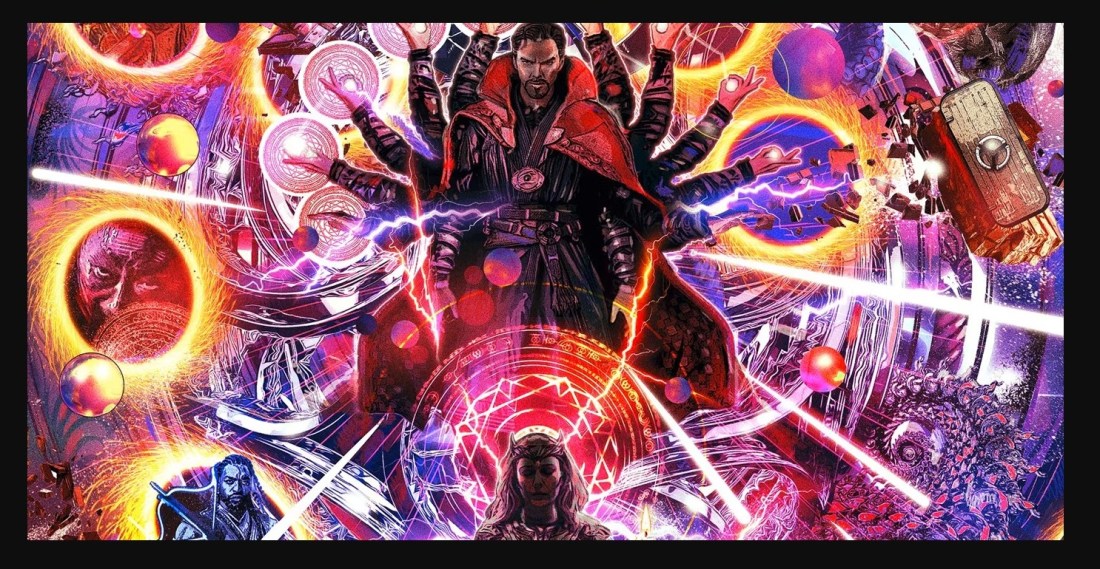




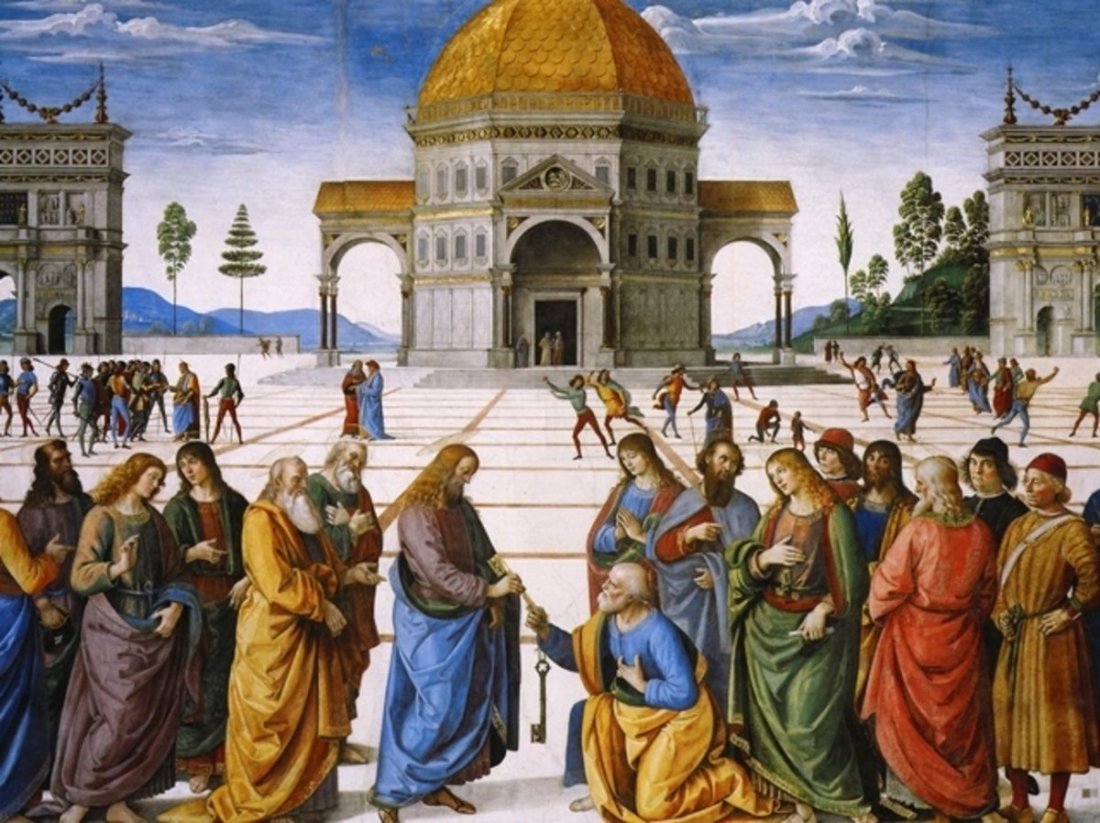
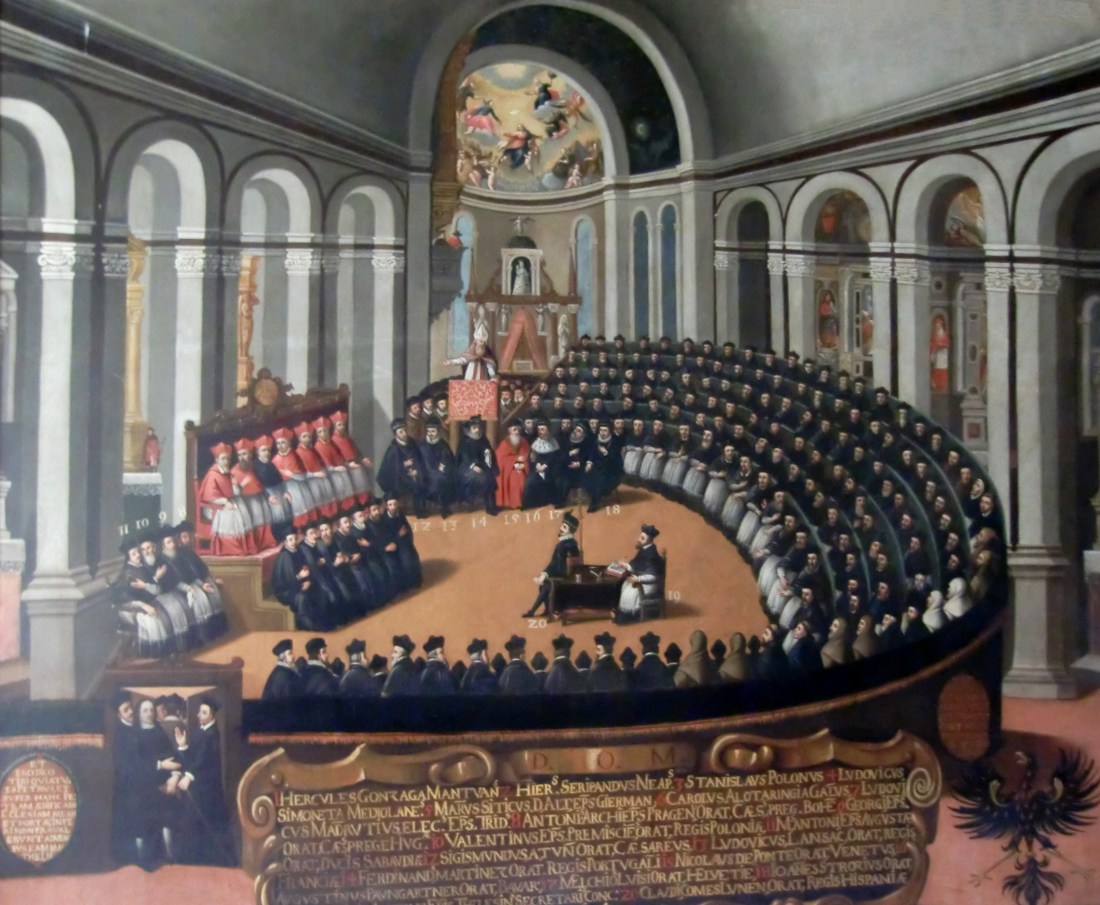














 Distilled Orthopraxy