Privileges, blessings and Providence: Christmas and Palestine

The fact is that in life, different people get different benefits. Calling these things ‘privileges’ isn’t entirely wrong, but when you compare it to the word ‘blessings’, it shows the deceitful difference in connotation.

When people use the word ‘privilege’, there are a loose set of connotations that most people would understand are associated with it (generally). It suggests that these benefits unfairly raise you above some other person, and that there is a social disharmony created by that. It suggests that in some measure, these benefits corrupt the goodness of your character, or at the very least place you in exactly the kind of circumstance where we should expect to see your character start to corrupt. Below are a few generic phrases that you may have heard, and which carry something of this network of meanings:

  • “Yeah but these laws were made by a bunch of privileged old white guys”
  • “Honesty, I think that’s just your privilege speaking”
  • “I feel like you can’t speak to this issue due to your privilege”

You might be thinking, ‘yeah there might be some truth to what you’re saying, but so what? People have to use words, and I think that one is just fine’. It is most certainly not. If your ‘privileges’ are unfair, if they corrupt you, if they improperly raise you above your common man, it is both easy and morally justifiable (in the minds of many), both on the personal and societal levels, to take action to change that. ‘We could even things out and make it better and more fair. Perhaps even, we should.’ More on this later.

On the other hand, you could choose to look at a person’s benefits as ‘blessings’. Blessings are more naturally conceived as those pieces of fortune granted to unworthy man by a Good Father. This view sees benefits not as the random but unfair outcomes of chance, but rather as the intentional outcomes of a person’s will and agency. This is a large part of the doctrine of ‘Providence’, which John Piper has described as God’s ‘purposeful sovereignty’. This way, when one person receives X and another Y, and a third person receives nothing at all, you can’t step in and correct some non-personal mistake of chance, but rather you have to reckon with the fact that the almighty and most merciful God intentionally gave out his gifts in that manner. Providence is personal, and the person behind it is God. God’s every action is good, and the goodness of Providence is therefore unimpeachable.

So, how does this all connect? Palestine? Christmas? Cancelling out privilege?

Well, unfortunately, a political action group planned the “Crash the Christmas Windows” protest, which was attended with the tagline “Christmas is cancelled, and there will be no joy or frivolity while children in Gaza are massacred.”.

To be clear, this protest was not designed to destroy property or to harm those families who would attend the windows, but it was designed to disrupt the gaiety and joy of the occasion (the unveiling of the Myer Christmas Windows, a long-standing Christmas tradition in Melbourne), and there’s no two ways about it: that’s grinch behaviour.

See, here’s the thing. If you think that all people need to have the same benefits before anyone can use or enjoy what they have in front of them (the ‘privilege’ mindset), you might feel justified in preventing Melburnians from enjoying Christmas, citing the very real and painful truth that almost every Gazan can’t. However, if you are a Christian, you ought to have the ‘blessings’ or Providence mindset: God has given you gifts, and he intends for you to enjoy them. You don’t have to be ashamed when you enjoy them either. God’s gifts are supposed to be embraced with enthusiasm.

Now please, do not assume that by our silence we are unfeeling for the plight of the Palestinians. This author cared deeply for their cause long before October 7 put them in public consciousness. The abundance of compassion this author feels for the sojourning Palestinians has been the motivation behind several posts and topics that we would love to enlarge on further at a later date.

But this Christmas, let us receive every good and perfect gift from a Father who loves each one of us, and who gave the world the ultimate gift of his son: A Jew born in Palestine, who is the king of every nation, and who will one day bring real, visible, tangible peace to every child of God who receives that gift with joy. So rejoice. And don’t let anyone smear your blessings as ‘privilege’.
Chains shall he break

You can read this author’s very short Christmas post from last year here. This one is very different.

Being a Christian and an advocate of the plight of the Palestinian people leads to some rather interesting conversations, especially due to assumptions about the attitude of Evangelicals to ‘Israel’ which largely find their origin in US culture and history.

However, this author does find himself in that position, and so the words of ‘O Holy Night’ come to bear upon FIFA, Qatar, Christmas, Palestine and a girl called Farha. How? Read on.

Truly He taught us to love one another;

His law is love and His gospel is peace.

Chains shall He break for the slave is our brother;

And in His name all oppression shall cease.

Sweet hymns of joy in grateful chorus raise we,

Let all within us praise His holy name

O Holy Night

It is a truth wonderful and full of colour that Christ breaks chains of bondage, both material and spiritual (Acts 12:6-11, Rom 6:15-23), and that in his name, all oppression shall cease (Rev 21:1-4).

The esteemed reader may have dear to their heart one particular people group or other that are currently experiencing oppression. The desire for justice and liberation is proper, and given by God. For this author, those thoughts are towards the Palestinian families, whose very lives and culture and land and history was forever marred by an event known as ‘Al Naqba’, the Catastrophe. This was the day that the Israeli armies (the state of Israel had not yet been declared, but we use this term for simplicity) conquested towns and land that was inhabited by Palestinian people, forcing them out of their homes into a state of dispossession and statelessness that they have remained in ever since.

The Israeli President-elect, Benjamin Netanyahu, utterly rejects this idea. To paraphrase his words from a recent interview with Jordan Peterson, it was like Israel was an empty apartment with no developments that he simply moved into. This author finds that kind of glib analogy utterly heartless, not to mention ahistorical.

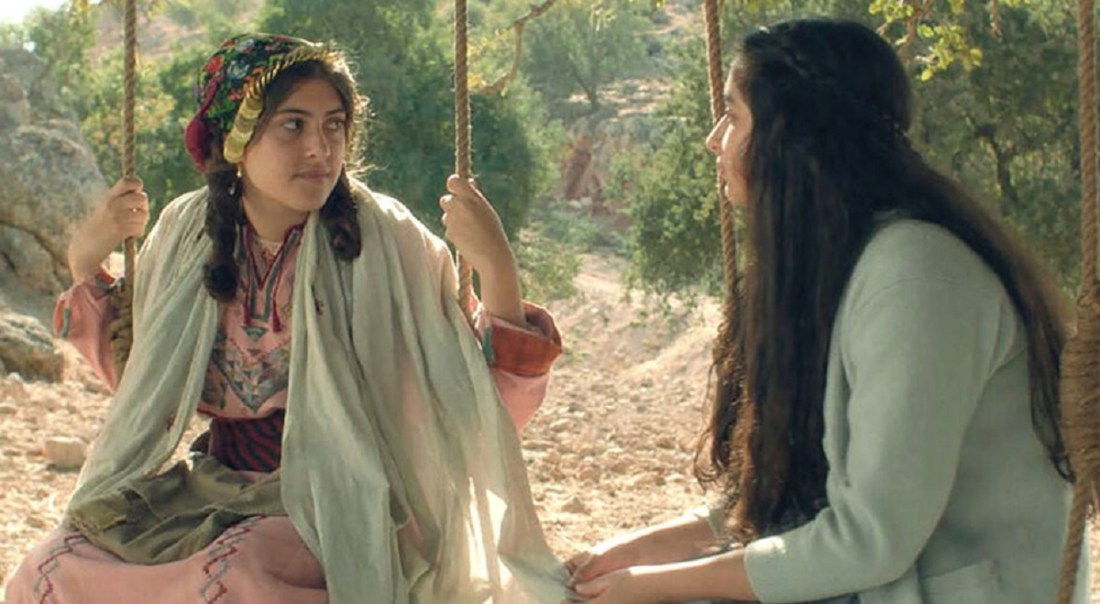
There is an excellent new film on Netflix called Farha, which shows this traumatic day from the perspective of a young girl called Farha, who simply wants to go to school and get an education. It is a moving and deeply personal film. Political, but not artless. Historical, but not cartoonish. Casting judgement, but with shades of fault, and varying brush strokes of responsibility. Watch it.

To this day, a state which is colonial in nature and European in origin (see: The Balfour Declaration, Sykes-Picot Agreement, Theodor Herzl) stands (though lacking any legal, historical or biblical justification) over the heads of its second-class Palestinian neighbours that it cordons off and shuffles around like so many cattle.

This author does not pretend to use modally neutral language, or to make a thorough and comprehensive analysis of everything that has happened in the contested history of Israel/Palestine. We are advocating for a particular position, and not its opposition.

The political quagmire of presenting the plight of the Palestinians in media is its own challenge, but this author has seen the most peculiar thing taking place at the world cup recently hosted in Qatar. In the context of the universal global language of Football, citizens of all nations have been coming to Qatar with armbands, t-shirts and scarves emblazoned with ‘Free Palestine’. There is something impalpable and therefore unassailable about this joyful camaraderie that is so softened and disarmed by its taking place at a sporting event. Acknowledging the role of confirmation bias, this author hesitantly thinks that more and more westerners are having their attention drawn to the region and issue, which might lead to more popular support and education on the subject as a whole.

However, social action is unreliable, and FIFA is no saviour. This author, even with only a few years of study on the subject, is utterly convinced that true freedom and statehood and reconciliation for the Palestinians will never come by politics, lobby groups, influencers or protests. God teaches in his word that he is reconciling all things to himself in his Son, and that all tribes, tongues and nations will stand before the throne. To explain what that implies, Jesus will reconcile Israeli and Palestinian people so completely that they will be able to love one another in utter sincerity, uncoloured and unadulterated. He will redeem Gaza and Ashkelon, Jerusalem and Jaffa, Hebron and the Golan Heights. As in Romans 8:19-22, the very stones, olive trees and gravel roads are crying out, waiting to be freed from the conflict and curse that all earth, and Palestine specifically, has been subjected to.

However, it isn’t just the political landscape that Jesus’ upside down Kingdom will heal. The peoples of the middle east, so long exposed to contradicting grand narratives (Judaism, Christianity, Islam), will be united in their submission to Jesus, the Messiah.

Although the scales are not close to equal in terms of damage wrought from one party to the other, all sin can be forgiven in Christ, both that of Israeli oppression and apartheid, and that of Palestinian bitterness, resentment and hatred. This author is hesitant even to write those words, but as Paul once told us, all have fallen short of the glory of God.

So, truly he taught us to love one another, and sometimes that feels impossibly hard. His law is love, and his gospel is peace, and sometimes our wounds can feel so deep that we don’t want our enemies to have a path to forgiveness. However, Jesus is not insensible to this pain, he was the one wronged more than anyone else, the only truly innocent man, and at that, the God-man.

This Christmas, things are not easy everywhere. There are many among us who have deep wounds to nurse this Christmas, even as we celebrate the incarnation of the Son of God. It looks like poverty, estrangement, statelessness, cancer, war and ethnic hostility. It looks like that and so much more. But one little Jewish boy, born into a nation under occupation just like that girl Farha, has won the battle that will turn all of that on its head.

Christmas is a profound reason for celebration. Reconciliation is possible, but only in Christ. So join with us in worship, and let the Earth receive her King.